A dry limestone grinding line can lose saleable output during wet feed periods even when the mill drive has spare power. Damp fines may bridge in the feed hopper or adhere to transfer chutes, while excess water reaching the mill can exhaust the available drying duty. The two problems call for different equipment changes. Before requesting a larger mill or a separate dryer, measure moisture at the mill feed, log the actual feed rate, and compare outlet gas temperature and finished powder moisture over the same operating period. Specify both normal and wet feed conditions in the quotation, together with product fineness, final moisture and dry solids throughput. This gives engineering and procurement teams a common basis for comparing feed handling improvements, integrated mill drying and separate predrying.
Check whether wet limestone reaches the mill steadily
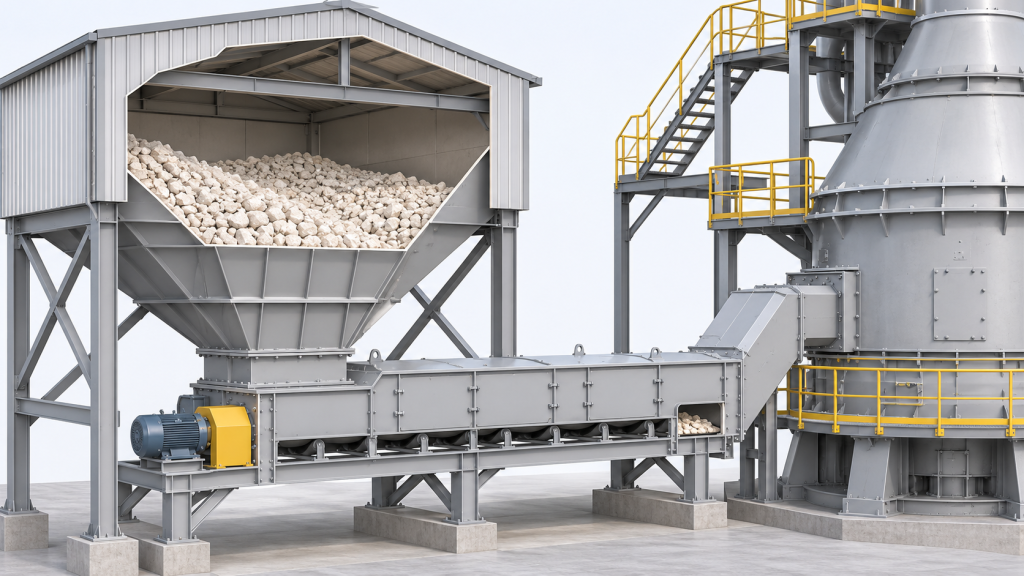
Trend the measured mass flow against the feeder setpoint and hopper level. A full hopper combined with falling or intermittent flow warrants a check of the outlet and transfer chutes for bridging or buildup. Confirm the feeder calibration and look for correlated flow interruptions before attributing the shortfall to evaporation. Ask vendors to assess the hopper outlet and feeder together using the actual fines content and expected storage time.
Define the wet feed case from representative samples
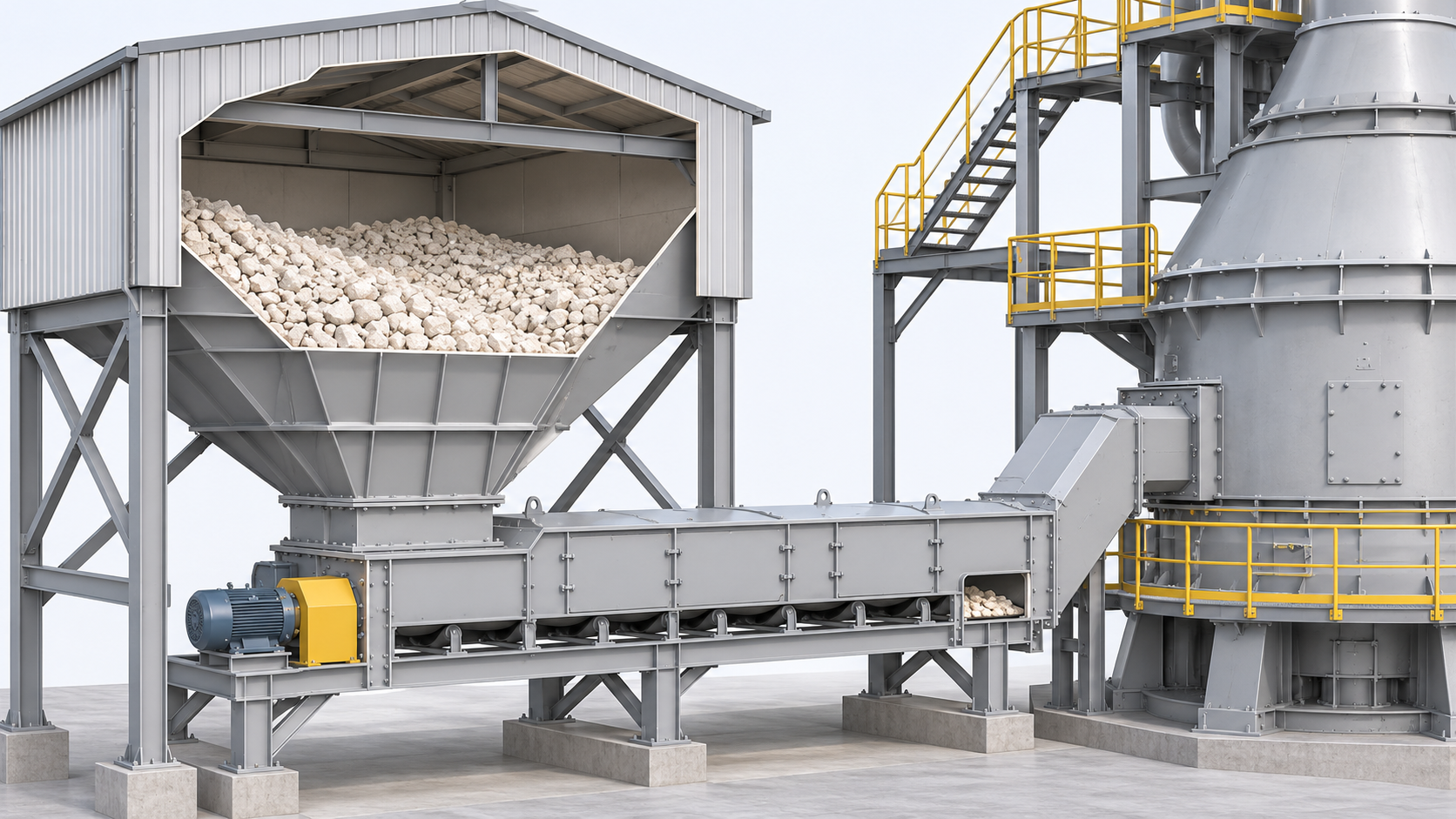
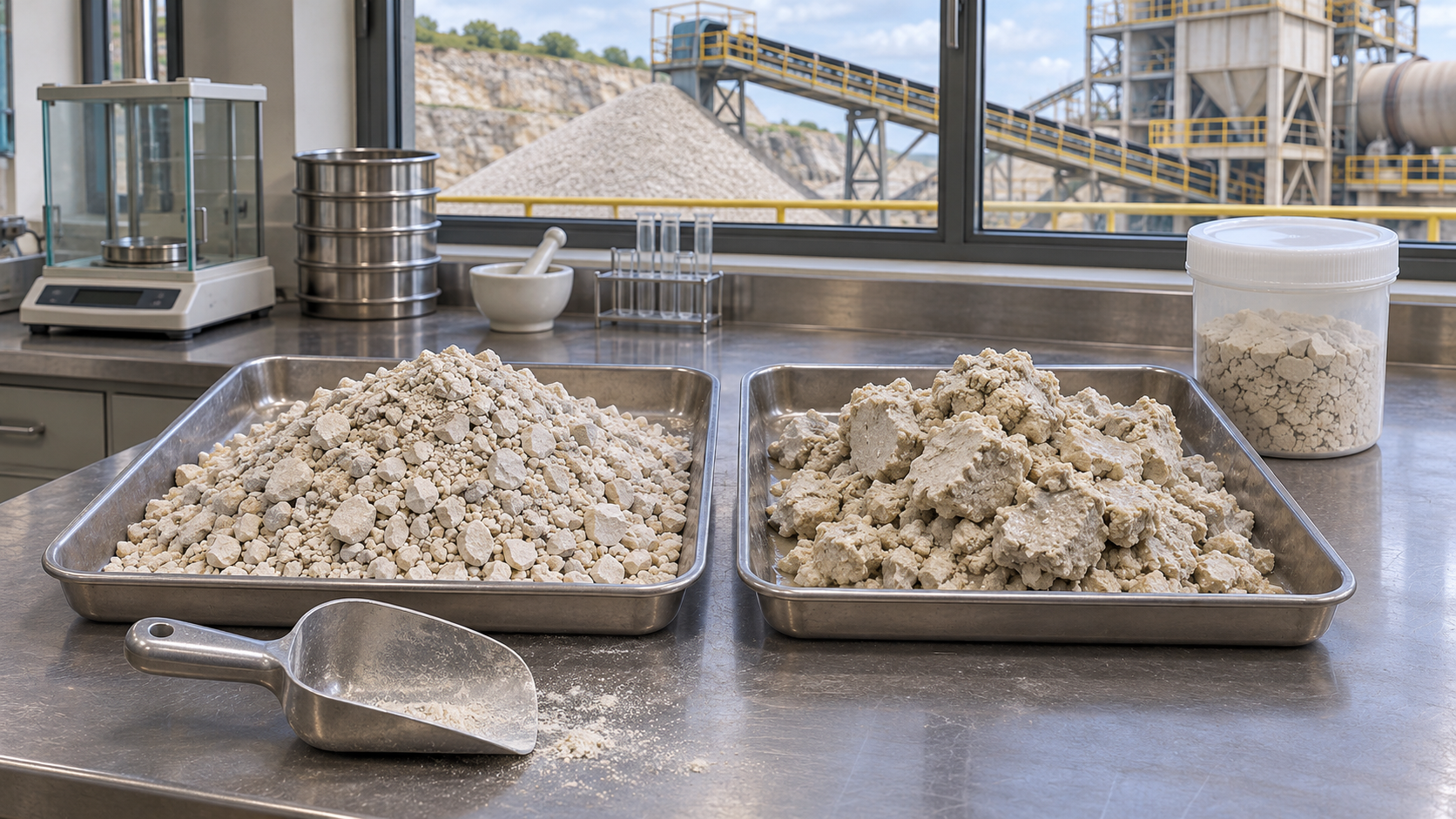
Collect increments from an approved sampling point on the feed stream across dry and wet operating periods. Seal samples promptly and record time, source and weather exposure. Measure moisture on a stated basis and retain separate results for distinct feed conditions so a composite average does not hide wet excursions. Include the size distribution and describe any cohesive lumps observed after storage.
Distinguish feed interruptions from a drying limit
| Operating observation | Check first | Decision to evaluate |
|---|---|---|
| Hopper stays full while measured feed surges or drops | Verify scale readings and inspect the hopper outlet and chutes under the plant isolation procedure | Review outlet geometry, feeder interface and buildup control |
| Feed holds steady while outlet gas cools and powder moisture rises | Check available heat input, gas flow and air leakage against the measured incoming water load | Compare additional integrated drying duty with separate predrying |
| Product moisture meets target while fineness slips | Check classifier settings, airflow and feed grindability at the same dry throughput | Review grinding and classification capacity |
Put the water balance into the request for quotation
For wet-basis moisture, calculate incoming water as wet feed mass flow multiplied by its water fraction. With negligible solids losses and no other water inputs, subtract the water retained in the finished powder to estimate the evaporation load. Ask suppliers to show the heat source, gas flow, fan duty and operating limits for the wet case, with the same feed size and powder fineness across bids. For background on the equipment selection, see the site’s limestone grinding mill selection overview and its discussion of grinding configurations for larger limestone lines.
Agree on a wet feed acceptance run
Define the sample points, instruments and stable measurement window before signing. During the trial, record feed moisture, dry solids throughput, product moisture and fineness over that window, along with gas temperatures and any feeder interruptions. Specify how utility availability and any off-spec periods will be recorded. Acceptance should depend on meeting the agreed throughput and powder specification together at the agreed feed condition.
mj
Author & industry specialist at ZWCC Mining & Crushing