Gold Ore Grinding Circuits: Test Gravity Recovery Before Buying a Centrifugal Concentrator
Adding a centrifugal concentrator to a gold ore grinding circuit should start with evidence of gravity-recoverable gold, not a catalogue capacity. A high head grade alone does not show whether gold is liberated, accessible to gravity separation, or present in a stream that can be treated consistently. Procurement and process teams need representative ore samples, staged laboratory testing, and a practical balance around the proposed side stream. They also need to account for screening, water demand, concentrate handling, and interruptions during concentrate discharge. This article explains how to define that test programme and turn its findings into a purchase specification. It does not assume a recovery percentage or prescribe a universal proportion of cyclone underflow to treat; those decisions depend on the ore, circuit configuration, and operating evidence.
1. Establish whether the gold is accessible to gravity separation
Request mineralogical observations alongside a gravity-recoverable gold (GRG) test. Gold enclosed in sulphides or gangue behaves differently from liberated particles. Do not infer gravity response from total gold assay, ore colour, or the presence of occasional visible grains. A staged test examines recovery as grinding exposes additional particles; it is evidence of amenability, not a guaranteed plant recovery.
Published research on GRG testing of different gold-bearing ores illustrates why mineral association and progressive comminution must be considered together. Use that principle to design ore-specific work rather than importing another deposit’s recovery figures.
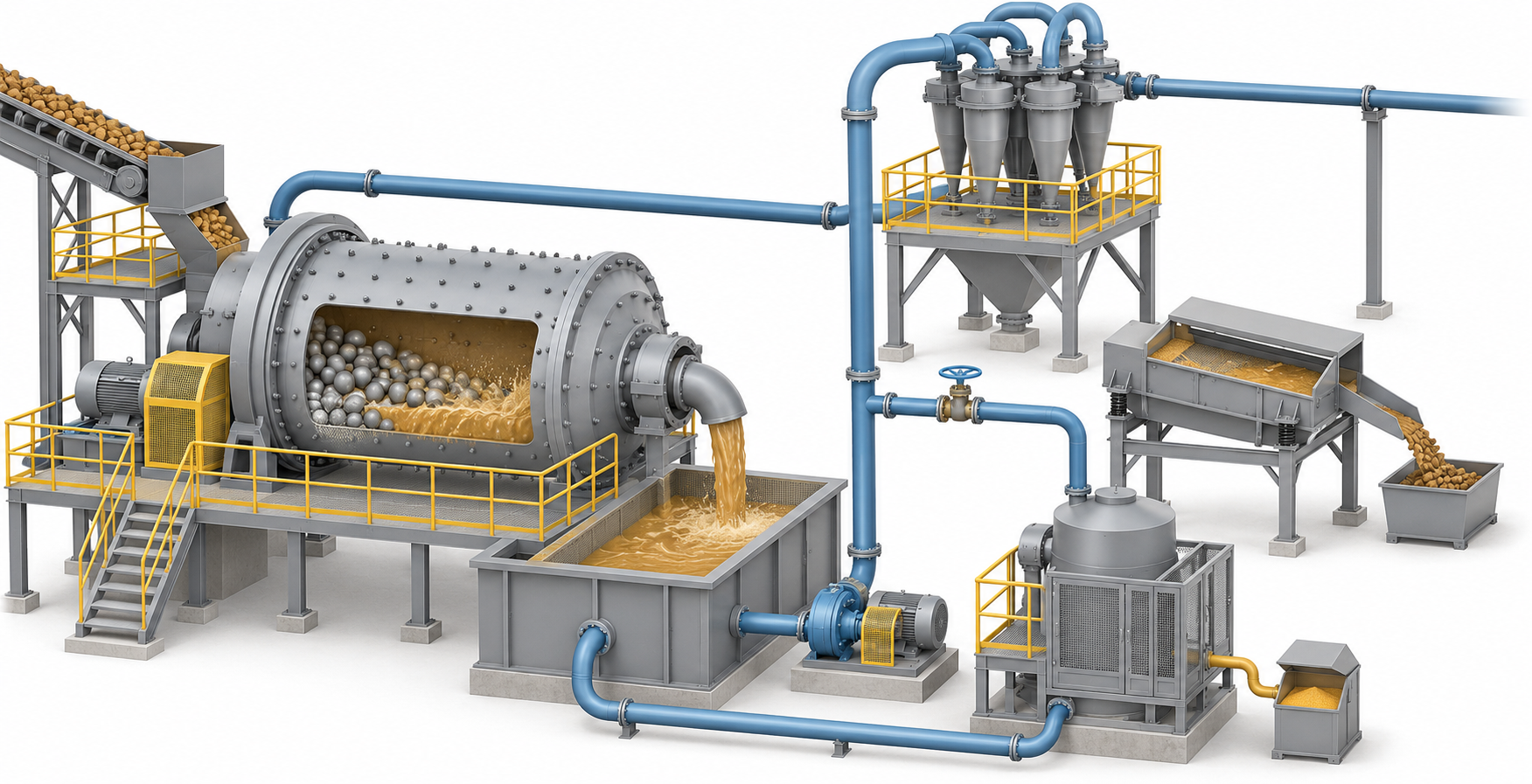
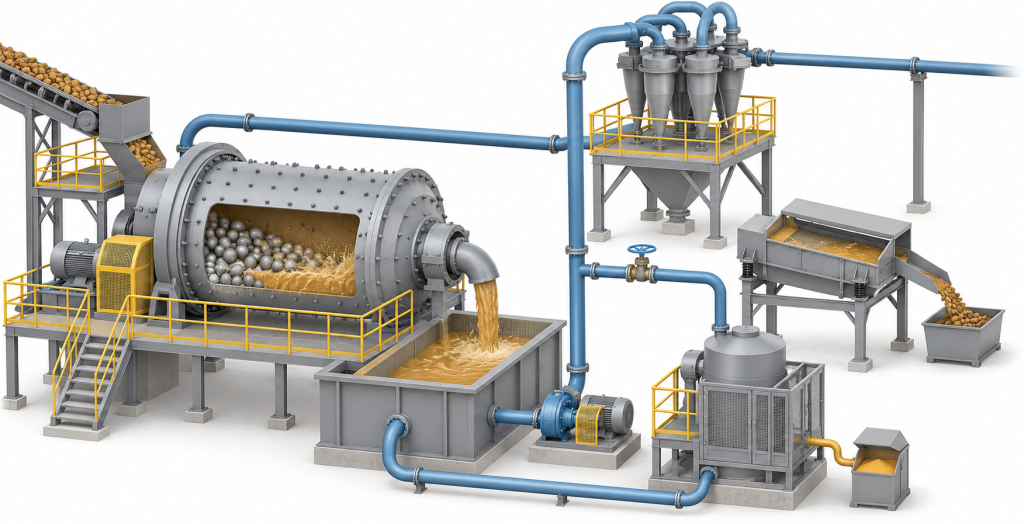
Original concept illustration: possible equipment relationships in a grinding and gravity circuit. Pipework and equipment selection require project engineering.
2. Make the sampling plan match the purchase decision
Ask a qualified metallurgical laboratory to specify sample mass and preparation before collecting material. Coarse gold can make small splits unrepresentative. Keep geological domains, weathered material, and anticipated blends identifiable; a single convenient composite can hide an unsuitable feed condition. Record preparation losses and retain material for repeat work.
For an operating plant, sample the candidate gravity feed during stable running and record solids flow, slurry density, particle size distribution, and operating state. A cyclone underflow sample taken during an upset cannot represent normal duty. Pair feed samples with appropriate circuit samples so the engineer can reconcile the stream balance and distinguish circulating gold from fresh gold input.
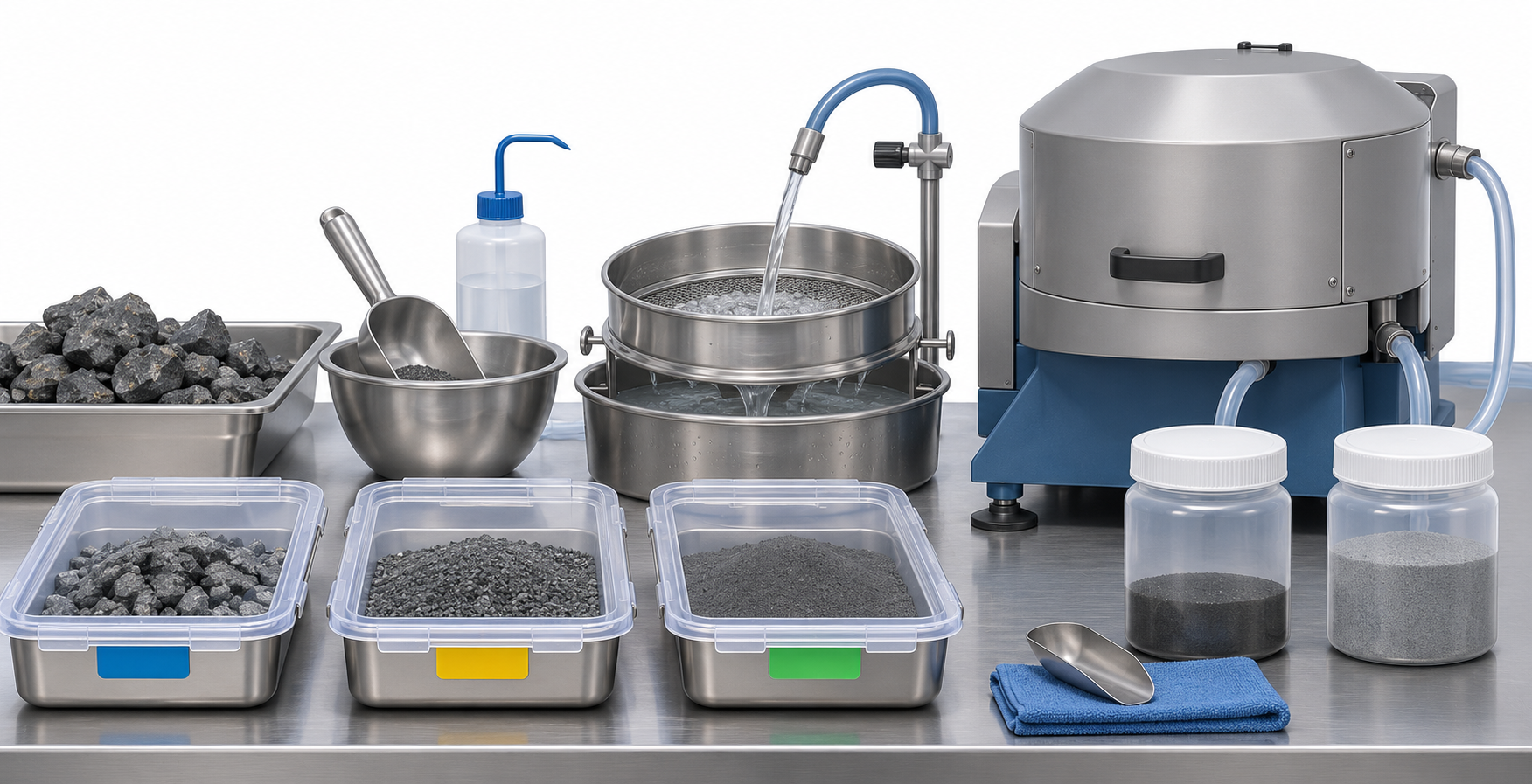
Original laboratory concept illustration; no project sample or test result is depicted.
3. Compare integration options before sizing the concentrator
The gravity unit is part of a system. Compare feasible take-off points by available gold, hydraulic conditions, screen duty, return location, and maintenance access. Screen oversize must have a defined return path. Gravity tailings must rejoin the grinding circuit without overloading a sump or disrupting classification.
When reviewing the ball mill duty and equipment arrangement, specify the gravity side stream separately from fresh ore throughput. A concentrator treating circulating slurry cannot be sized from the mill’s fresh-feed tonnage alone. Review the upstream primary jaw crushing stage as well: changes in crushed feed and ore blending can change grinding conditions and the material presented to gravity recovery.
| Decision | Evidence to request | Procurement implication |
|---|---|---|
| Whether to include gravity recovery | GRG response by ore domain and liberation stage | Keep gravity installation conditional on metallurgical and economic review |
| Which stream to treat | Reconciled solids, size and gold distribution at candidate take-offs | Specify feed conditions and return interfaces |
| What screening is needed | Oversize distribution and supplier feed restrictions | Include screen, oversize return and access in scope |
| What water system is required | Tested water quality and supplier pressure and flow requirements | Define filtration, pumping and monitoring duties |
| How to handle concentrate | Concentrate mass, assay and downstream treatment tests | Provide secure collection and an agreed treatment route |
4. Separate laboratory recovery from operating availability
A laboratory GRG value does not directly predict plant recovery. Scale-up must consider the fraction of the circuit stream treated, particle size, unit performance, concentrate cycle, and equipment availability. Ask the process designer to state model assumptions and show how the selected unit behaves across expected feed conditions.
Include water quality, screen blinding, feed interruptions, and concentrate discharge in the operating review. Define a downstream treatment route for the gravity concentrate before purchasing. Recovering gold into a small stream is only an intermediate step; its subsequent treatment and accounting affect the value of the installation.
5. Write an acceptance plan around measured operating conditions
The request for quotation should attach the testwork basis, feed envelope, interface drawing, water specification, concentrate handling scope, and required instrumentation. Ask suppliers to distinguish continuous operating duty from peak feed capacity and to state exclusions explicitly.
Agree commissioning measurements before placing the order: calibrated flows, timed sampling, solids and gold balances, concentrate cycle records, and availability over an agreed operating period. Specify how unstable plant operation or failed balance closure will be handled before accepting a trial. Make any recovery commitment conditional on the defined ore and operating envelope. The purchase decision should rest on recoverable value and a workable circuit, supported by evidence that both parties can inspect.
mj
Author & industry specialist at ZWCC Mining & Crushing