Chromite Spiral Concentrators: Measure Chromium Loss Before Specifying Desliming
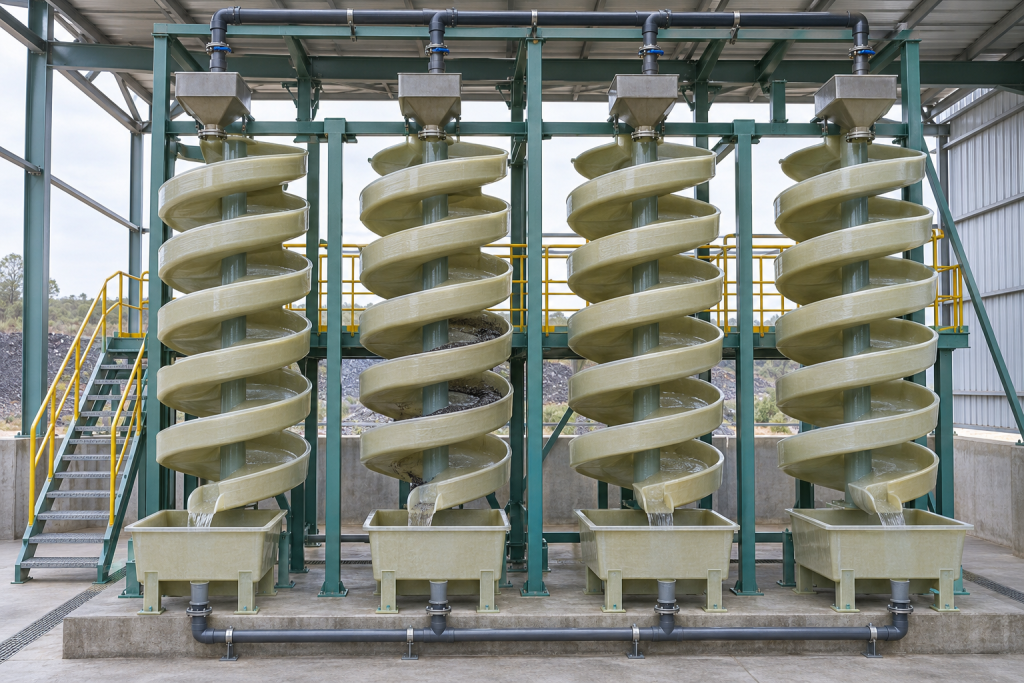
Desliming ahead of a chromite spiral bank can improve the concentrate grade while sending fine chromite to the overflow. A procurement trial should measure both effects on the same basis: the dry mass and contained chromium in the feed before desliming. Split representative ore composites between a baseline with no dedicated desliming stage and candidate desliming settings. Assay the cyclone overflow and underflow and the spiral concentrate, middlings and tailings. Compare routes at the concentrate grade required by the buyer, and check whether the preferred setting holds up when the feed contains more fines or the circuit runs on recycled water. These measurements help the project team decide whether to install desliming, select a gentler cut, or test a separate route for recovering chromite from the overflow.
Define the feed before choosing a cut size
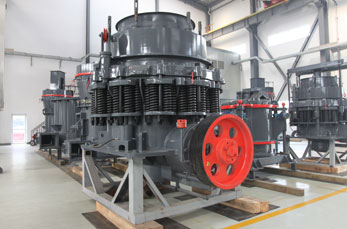
Take composites at the planned spiral feed preparation point and preserve the natural fines during sampling and splitting. Keep distinct ore types separate when they generate different fines loads. Wet-size and assay the fractions for Cr2O3. Where a fine fraction carries significant chromium, use mineralogy to check whether the chromite is liberated or locked with gangue. Keep the upstream preparation consistent across the trial. Experimental work on chromite gravity concentration illustrates the value of testing defined size fractions. The chromite crushing and feed preparation guide covers the preceding equipment decisions.
Run the spiral at comparable conditions
Use matched feed splits and the same upper feed size limit for the baseline and deslimed trials. Screen several practical cyclone settings before selecting the conditions for repeat tests. Record feed pressure and percent solids, then sample both cyclone outlets to measure the actual size and chromium partition. For the spiral, hold the trough geometry constant in the initial comparison and record dry solids feed per start, slurry concentration, water addition where applicable and splitter position. Test enough splitter settings to compare the routes near the same product grade. Run repeat samples after flow and solids concentration stabilize.
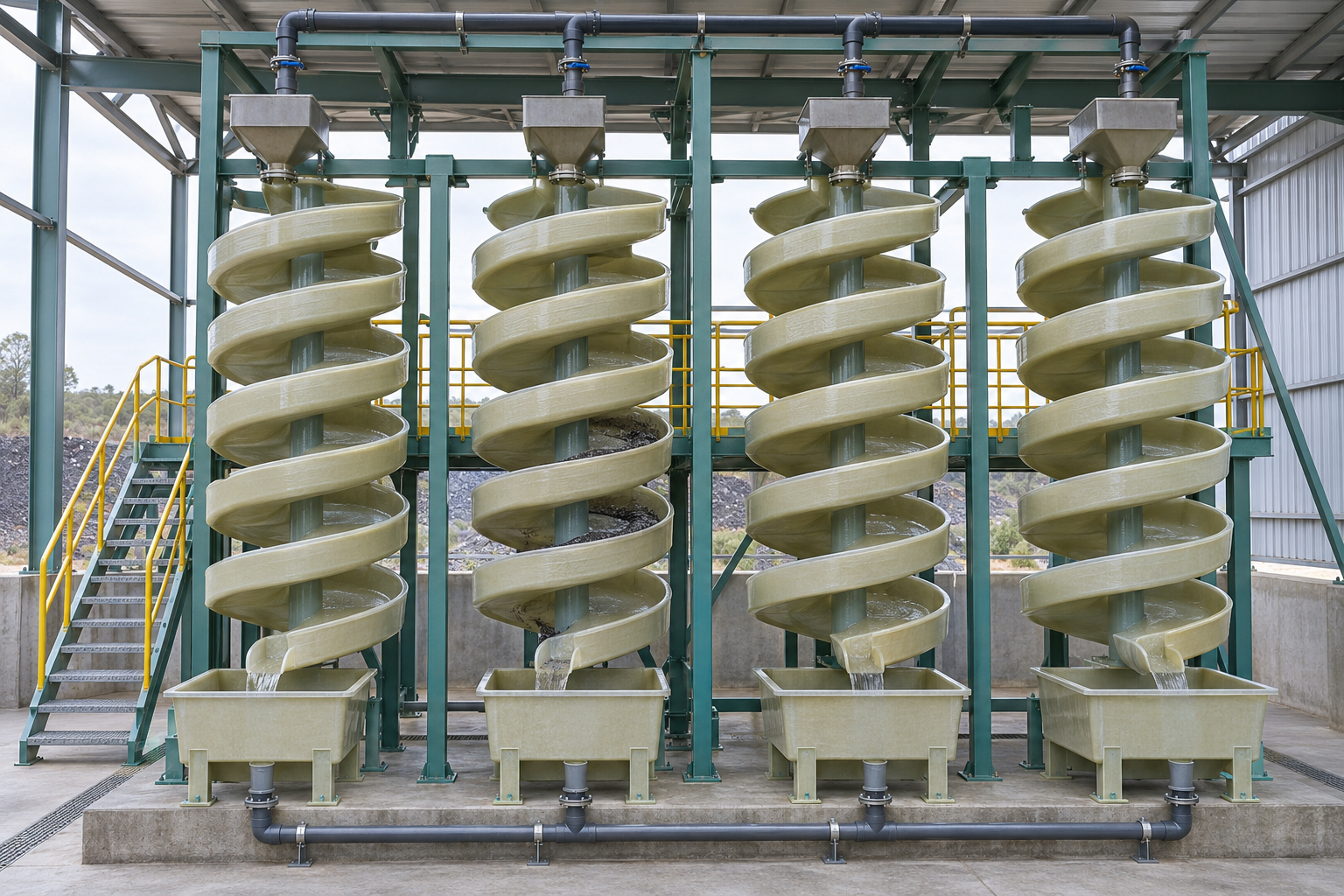
Concept illustration of a pilot spiral bank.
Close the chromium balance across the whole route
Collect synchronized samples across the trial boundary. Measure dry mass and Cr2O3 grade for each stream, then multiply them to calculate contained Cr2O3. For the circuit recovery, divide the amount in the final concentrate by the amount in the original trial feed. Report spiral stage recovery separately using the spiral feed as its denominator. Track middlings as a separate outlet during open-circuit testing. If the proposed plant recycles them, confirm the circuit result in a trial with recycle and count only streams that cross the circuit boundary. Investigate poor balance closure before ranking the options.
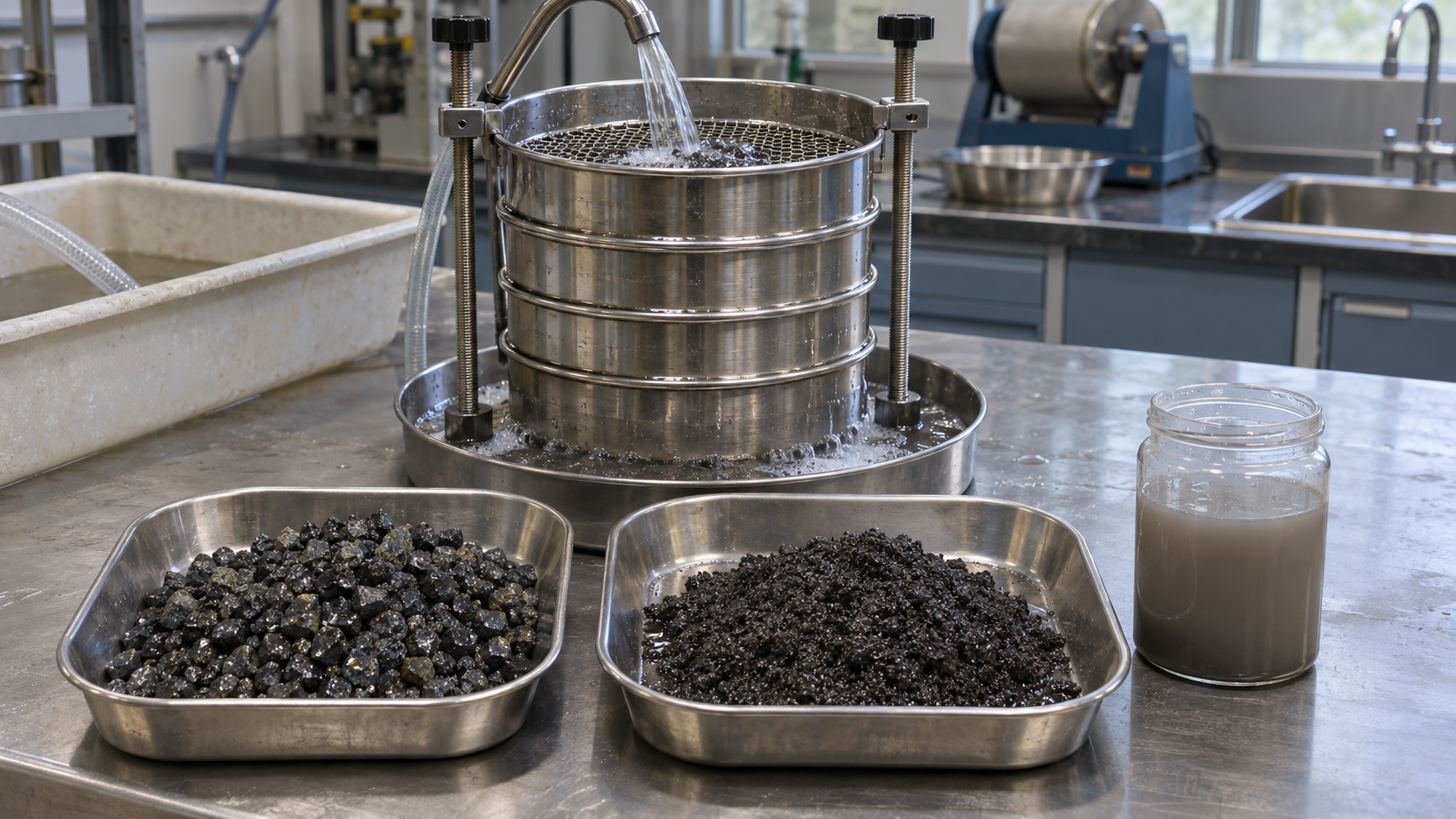
Concept illustration of wet sizing and fines sampling.
| Trial observation | Check before specifying equipment |
|---|---|
| Concentrate grade rises and little chromium reports to overflow. | Confirm circuit recovery at the target grade on a higher-fines composite and with representative process water. |
| Spiral recovery improves but circuit recovery falls. | Use the overflow assay and dry mass to quantify chromium loss. Trial a gentler cut and compare at the same concentrate grade. |
| Overflow carries a material share of the feed chromium. | Check liberation by size and test a separate fines recovery stage before assigning the stream to final tailings. |
| Results drift with recycled water. | Track suspended solids, feed dilution and cyclone partition. Repeat the trial with a water supply representative of steady operation. |
Check water and tailings duties with the preferred setting
Use the measured flow split to estimate the hydraulic load on the overflow handling system and the make-up water needed to maintain the spiral feed concentration. In the pilot, check how quickly overflow solids settle and how much suspended material returns with the recovered water. Check the arrangement against the broader chrome ore processing flowsheet when identifying the interfaces between feed preparation, gravity concentration and water handling.
Specify acceptance on original feed
Ask vendors to quote against the tested ore types and feed size, solids and water ranges. State the required concentrate grade and minimum circuit recovery on original feed, and agree on allowable chromium loss in the overflow, sampling points, trial duration and balance closure criteria. Include cyclone pressure control, spiral distributor capacity and access to the overflow and spiral outlets for sampling. If a separate fines circuit is needed to meet recovery, define that duty and its acceptance test in the same equipment scope.
mj
Author & industry specialist at ZWCC Mining & Crushing