Copper Tailings Filter Press Sizing: Test Full-Cycle Throughput and Cake Moisture
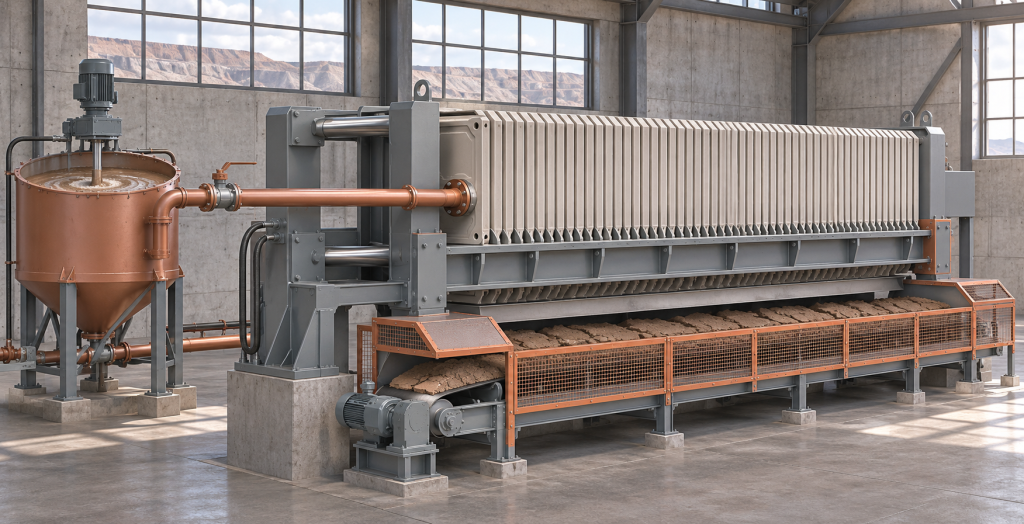
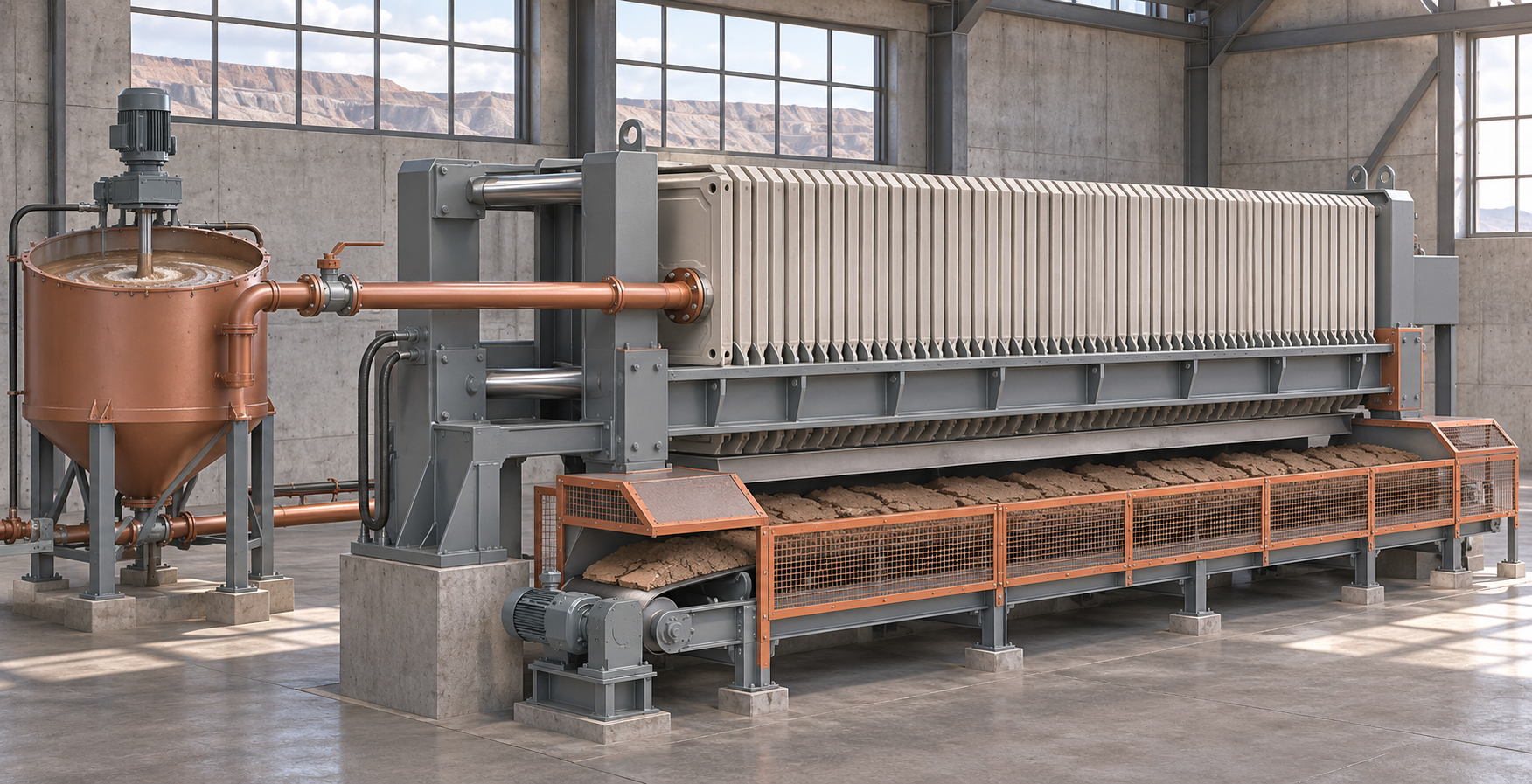
A filter press for copper flotation tailings has to meet two conditions at the same time: discharge cake that the handling system can accept and clear the required dry solids load without accumulating slurry upstream. A short bench test can show how easily a sample filters, but a production press also spends time filling, opening, discharging cake and preparing for the next cycle. Before requesting bids, test representative thickener underflow across the expected range of solids concentration and fine particle content. For each condition, pair cake moisture with dry solids per complete cycle, document cake release, and check the quality of filtrate routed back to the plant. Use those results to compare press area, the number of units and the capacity of shared feed, air and discharge systems.
Which tailings should go into the pilot test?
Sample at the proposed press feed point so the test captures the underflow density, flocculant history and process water the press will actually see. Keep a normal operating composite, a credible fine-rich blend and a low-solids underflow condition separate. Record the solids fraction by mass, particle size distribution, sample age and upstream operating conditions. Agree how the vendor will store, remix and condition each sample so that preparation does not hide changes in feed behavior.
If the plant is still in design, produce tailings from representative flotation testwork and replicate the proposed thickening step. The copper beneficiation flowsheet provides context for locating the tailings stream. Include material from the expected range of ball mill circuit operating conditions where changes in grind could shift the fraction of fines reaching flotation tailings.
How should the vendor calculate full-cycle capacity?
Start with the dry mass discharged per cycle and divide it by the elapsed time from one cycle start to the next. If the discharged cake is weighed wet, multiply its mass by one minus the measured wet-basis moisture fraction. Require a stage-by-stage timeline covering filling and pressure buildup, filtration, squeeze or air blow where fitted, opening, cake discharge, and closing. Count routine cloth cleaning at its actual frequency in the operating average, and state maintenance availability separately.
Ask the vendor to identify timings measured on the pilot unit and timings estimated for the proposed production press. Production filling depends on the pump and slurry distribution, while mechanical cycle time depends on the plate shifting and discharge arrangement. Published tailings filtration scale-up comparisons describe how these differences can affect the translation from test equipment to operating capacity.
What should the pilot report show besides moisture?
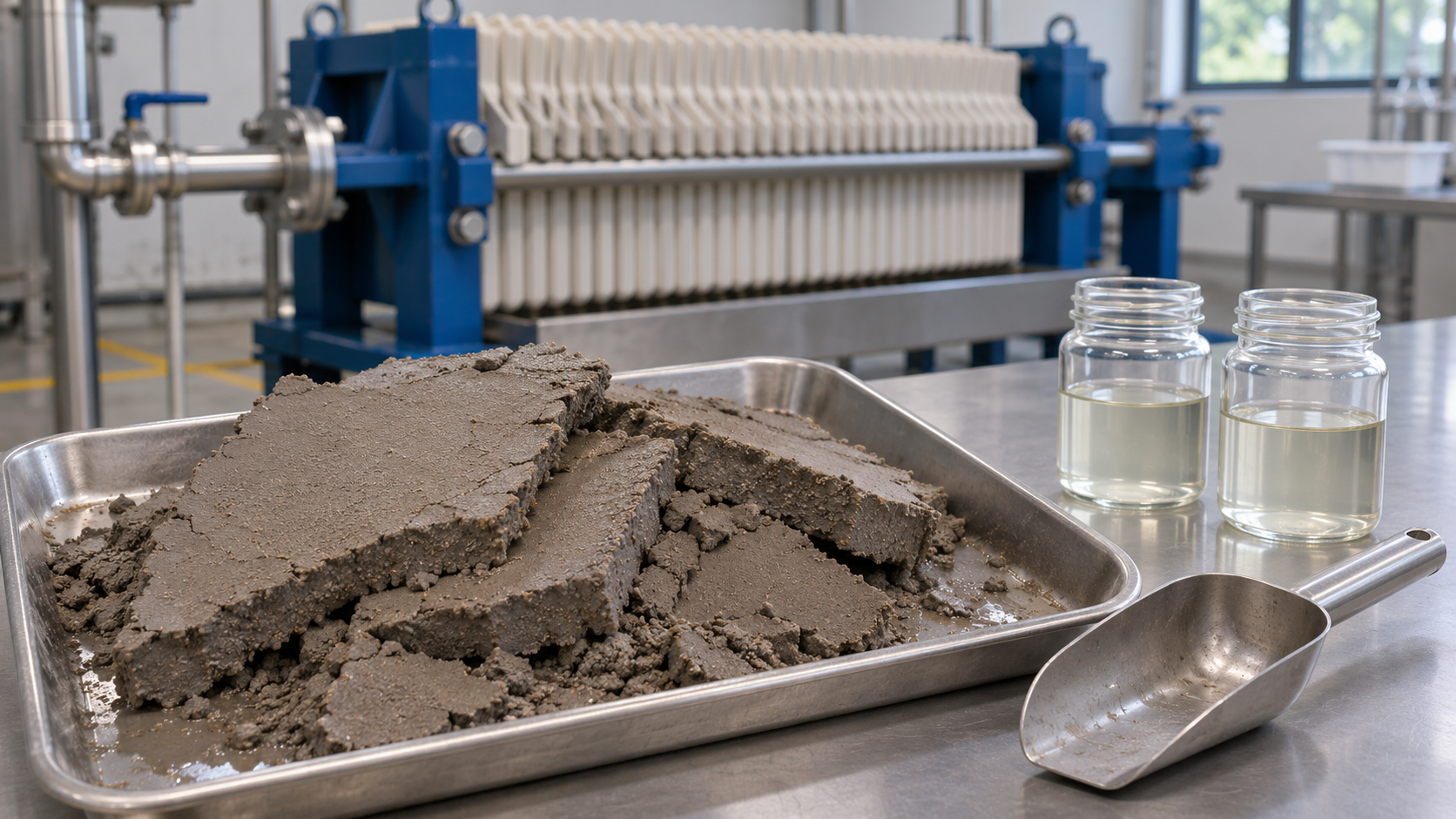
Repeat cycles on each feed condition and record how the cake releases as well as how much water it contains. Sample several locations when cake thickness or appearance varies across the plate. A moisture result based only on the driest piece can hide sticky sections that slow discharge. Record residues on the cloth, interruptions between cycles and suspended solids in the filtrate. Use agreed wet-basis sampling and drying procedures so the measured moisture is comparable across vendors.
| Feed or operating condition | Measurements to compare | Decision supported |
|---|---|---|
| Normal thickener underflow | Dry solids per cycle, elapsed cycle time and wet-basis cake moisture | Establish the baseline capacity at the agreed moisture limit. |
| Fine-rich tailings | Cake moisture at each tested cycle setting, cloth residue and release interruptions | Check whether extra drying time or more filter area is needed. |
| Low-solids underflow | Feed concentration, fill time, discharged dry mass and filtrate suspended solids | Check the allowable dilution range and the margin available in the feed system. |
| Repeated cycles | Cloth wash frequency, wash-water demand, filtrate quality and discharge consistency | Estimate routine downtime and size shared services on the observed operating basis. |
Can the surrounding equipment sustain the quoted output?
Check the peak demand when several presses are operating, especially if their fill, air blow or discharge stages can overlap. Compare the pump duty with the proposed fill sequence, and use the measured discharge mass per cycle to check the chute, hopper and takeaway conveyor. Review how much slurry buffer is available while a press is out of service, and agree how off-specification filtrate will be diverted before it enters the process water circuit.
What belongs in the filter press acceptance test?
Put the allowable feed range, minimum dry solids throughput and maximum cake moisture on the same acceptance sheet. Add the sampling and weighing methods, test duration, required number of repeat cycles and the treatment of cloth washes and interruptions. Have each supplier show the proposed number of presses and installed area on that basis. Set the cake handling limits with the receiving and transport teams, and obtain any placement criteria from the tailings facility design team. Use the worst credible feed condition to check whether the installed circuit can still clear the required load.
mj
Author & industry specialist at ZWCC Mining & Crushing