Wet Magnetic Separation for Ceramic Feldspar: Test Iron Grade and Product Yield
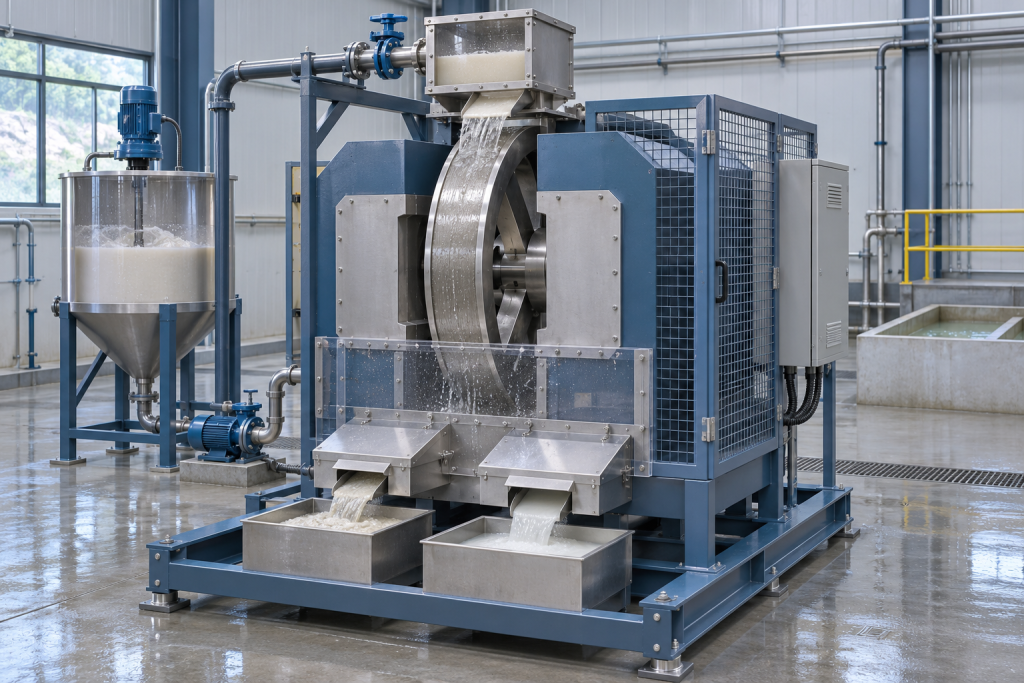
A wet high-intensity magnetic separator can remove iron-bearing particles from a feldspar slurry, but a lower iron assay alone cannot justify buying the machine. The ceramic plant needs a product that meets its iron and fired-color requirements at a dry mass yield the project can afford. Start with representative ore blends and a product specification from the buyer. Then run controlled trials that vary magnetic field and slurry conditions while collecting both the nonmagnetic product and the magnetic reject. Weigh and assay each stream on a dry basis so the team can tell whether a cleaner product comes from selective iron removal or from discarding too much saleable material. Use the settings that meet quality and yield together to define throughput, water demand, matrix cleaning and the purchase acceptance test.
Which forms of iron can the separator capture?
Ask the laboratory to identify the minerals carrying iron in each size fraction. Discrete iron-bearing grains that respond to the field are plausible targets. Iron locked in feldspar grains or occurring as surface stains may remain in the product. If the magnetic response is weak, use microscopy and size-by-size assays to decide whether to test additional liberation or a different treatment. Sample after crushing and grinding as well as before them if steel wear is a suspected source of iron.
Use the site’s feldspar crushing overview when reviewing how the upstream circuit prepares the feed. For removable surface coatings, a separate wash or scrub test can help establish what feed preparation contributes before the slurry reaches the separator. The attrition scrubbing trial for clay-coated silica sand shows how to compare untreated and scrubbed splits. Apply that test design to feldspar and assay the wash solids to see how much iron actually leaves with them.
How should the wet magnetic separation trial be run?
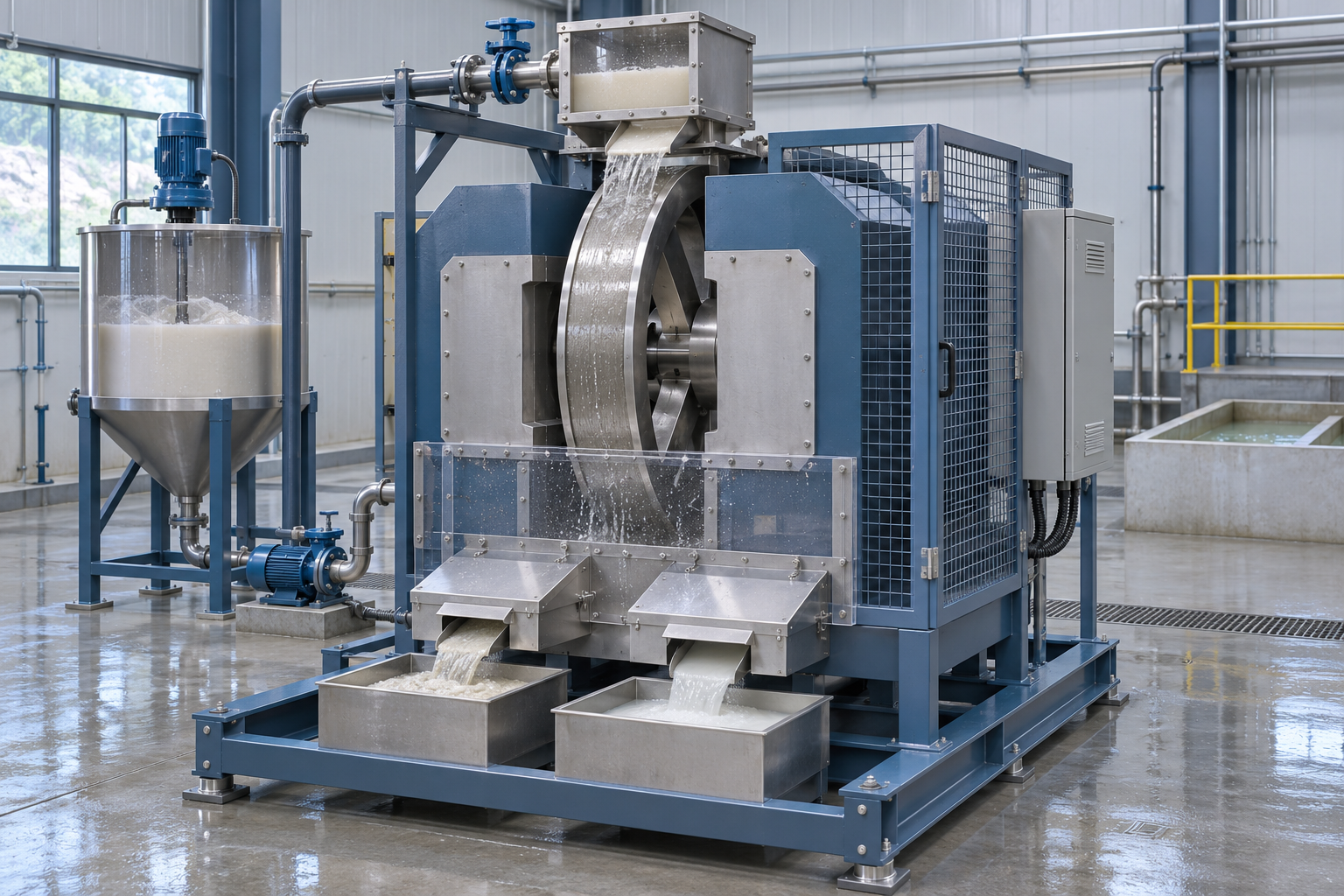
Establish a baseline with a representative slurry and record the feed size distribution, solids concentration, dry feed rate, field setting and matrix geometry. At each setting, wait for stable conditions, then collect matched samples of feed, nonmagnetic product and magnetic reject over the same interval. Include the solids flushed during matrix cleaning in the reject. Change one variable at a time during initial trials, then repeat promising combinations on ore blends that span the expected range of iron content and fines.
A laboratory study of wet magnetic separation on fine feldspar examined slurry solids, feed rate and field strength. Use those variables to plan the trial and establish the operating window with the actual plant feed.
How much feldspar product is lost for each improvement in iron grade?
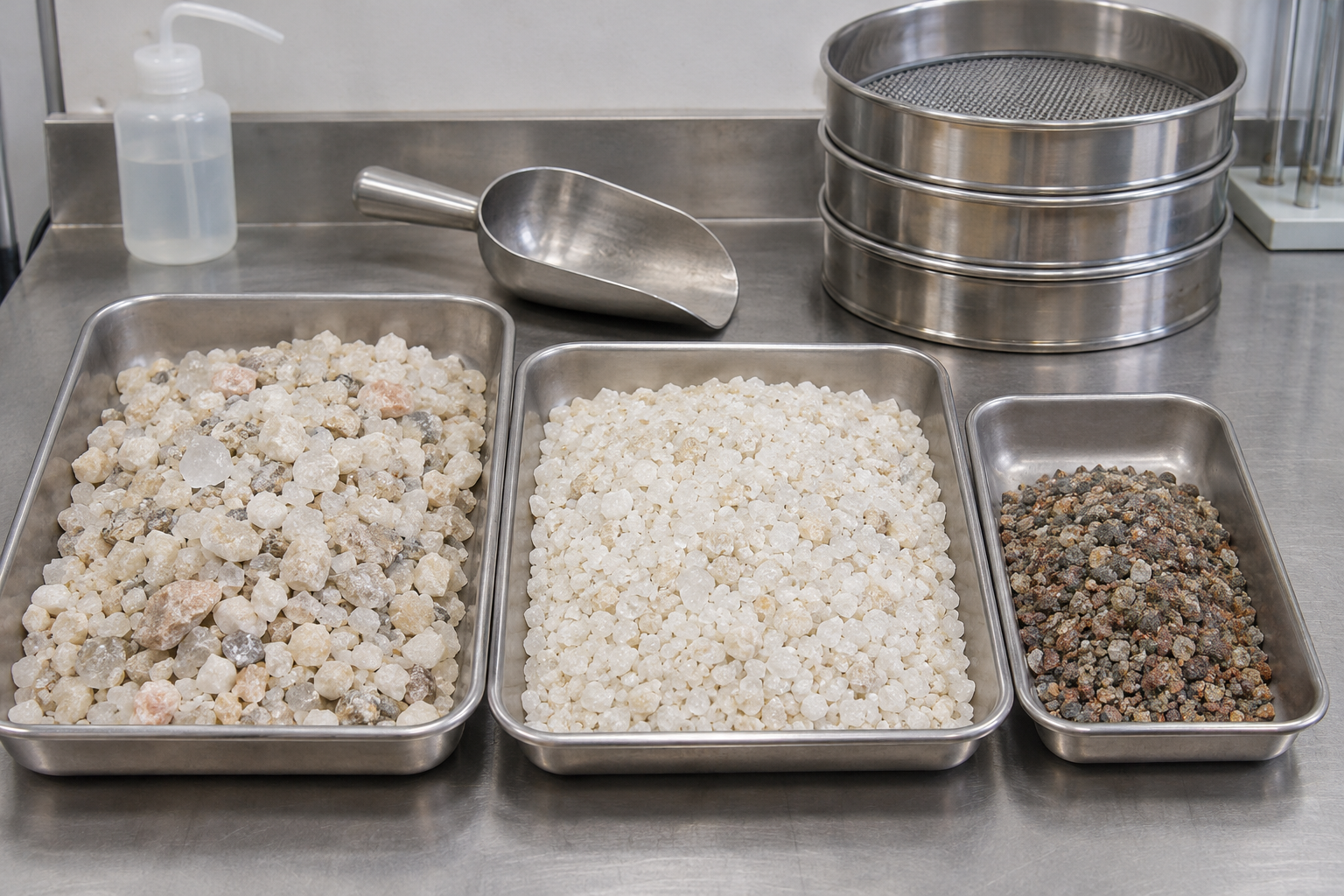
Calculate dry product yield by dividing the dry nonmagnetic product mass by the dry separator feed mass. For the proportion of feed iron sent to reject, divide the reject dry mass multiplied by its iron assay by the feed dry mass multiplied by its iron assay. Use the same reporting basis for all assays, such as total iron expressed as Fe2O3. Reconcile both the solids and iron balances before ranking settings. If an upstream wash or classification stage discards solids, also report overall product yield against the feed entering that stage. Compare fired color using the buyer’s agreed preparation and firing method.
What should the team change when results drift?
| Trial observation | Check next | Equipment decision |
|---|---|---|
| Higher field lowers product iron but sends more pale solids to reject. | Assay the reject by size and check for fine feldspar trapped in the matrix. | Compare a different matrix or wash setting at the same product iron limit. |
| Product iron rises when feed rate increases. | Hold slurry solids and field constant. Check feed distribution and matrix loading over time. | Size the separator using the highest sustained feed rate that meets both acceptance limits. |
| Product iron is steady at first, then rises before cleaning. | Sample across the full operating interval and record the effect of flushing. | Put the demonstrated cleaning interval and water requirement in the equipment scope. |
| Higher field barely changes product iron. | Check the residual iron hosts and compare selected size fractions. | Test liberation or another treatment before specifying a larger magnet. |
What should the purchase acceptance test require?
Specify the feed envelope, the maximum dry-basis product iron assay, the minimum dry product yield and the sustained dry feed rate. Include the buyer’s fired-color criterion where it governs acceptance. Agree on sampling locations, repeat runs, allowable mass-balance error and how to count slurry solids discharged during cleaning. Have the supplier state matrix geometry, service access, cleaning frequency, power demand and separate process and wash-water requirements. A setting qualifies only when the test demonstrates the required quality, yield and feed rate on the agreed material over a representative operating period.
mj
Author & industry specialist at ZWCC Mining & Crushing