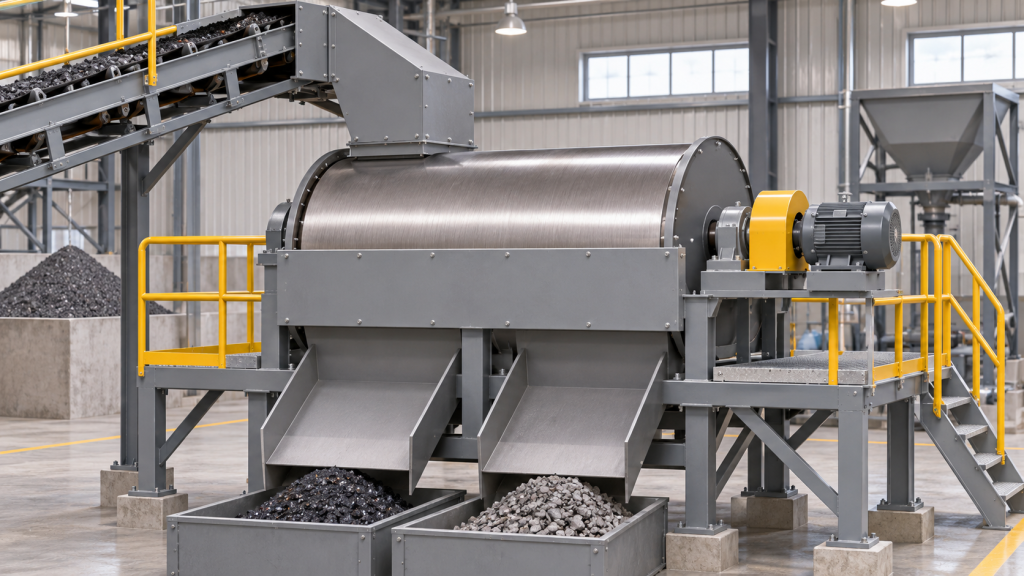
Dry magnetic cobbing can reduce the tonnage sent to a magnetite grinding circuit by rejecting some gangue after crushing. Its value depends on how much recoverable magnetite leaves with that reject, how consistently the separator is fed, and what the retained material does in the mill. Before requesting a drum quotation, test representative ore domains at candidate crush sizes and keep separate samples of feed, magnetic product and reject. Record dry stream masses and assay each size fraction so that losses in coarse composites or fine material are visible. Then compare the proposed circuit with a whole-feed grinding baseline at the same downstream product specification. The procurement team can use those results to define an acceptable feed envelope and a pilot acceptance test that protects recovery while demonstrating a meaningful reduction in mill feed.
Choose crush sizes that expose a useful separation
Sample distinct ore domains and anticipated blends, including ore with visibly different banding or weathering. Prepare candidate products using a crushing route that represents the plant. A secondary cone crusher and a vibrating screen can form a closed circuit where the oversize returns for further crushing. Record the full size distribution and test the fines separately if they are candidates for bypass. Published dry separation experiments on titanium-magnetite ore illustrate why losses can differ across size fractions. Use your own ore to determine the cut sizes and settings.
Measure both the material rejected and the magnetite lost
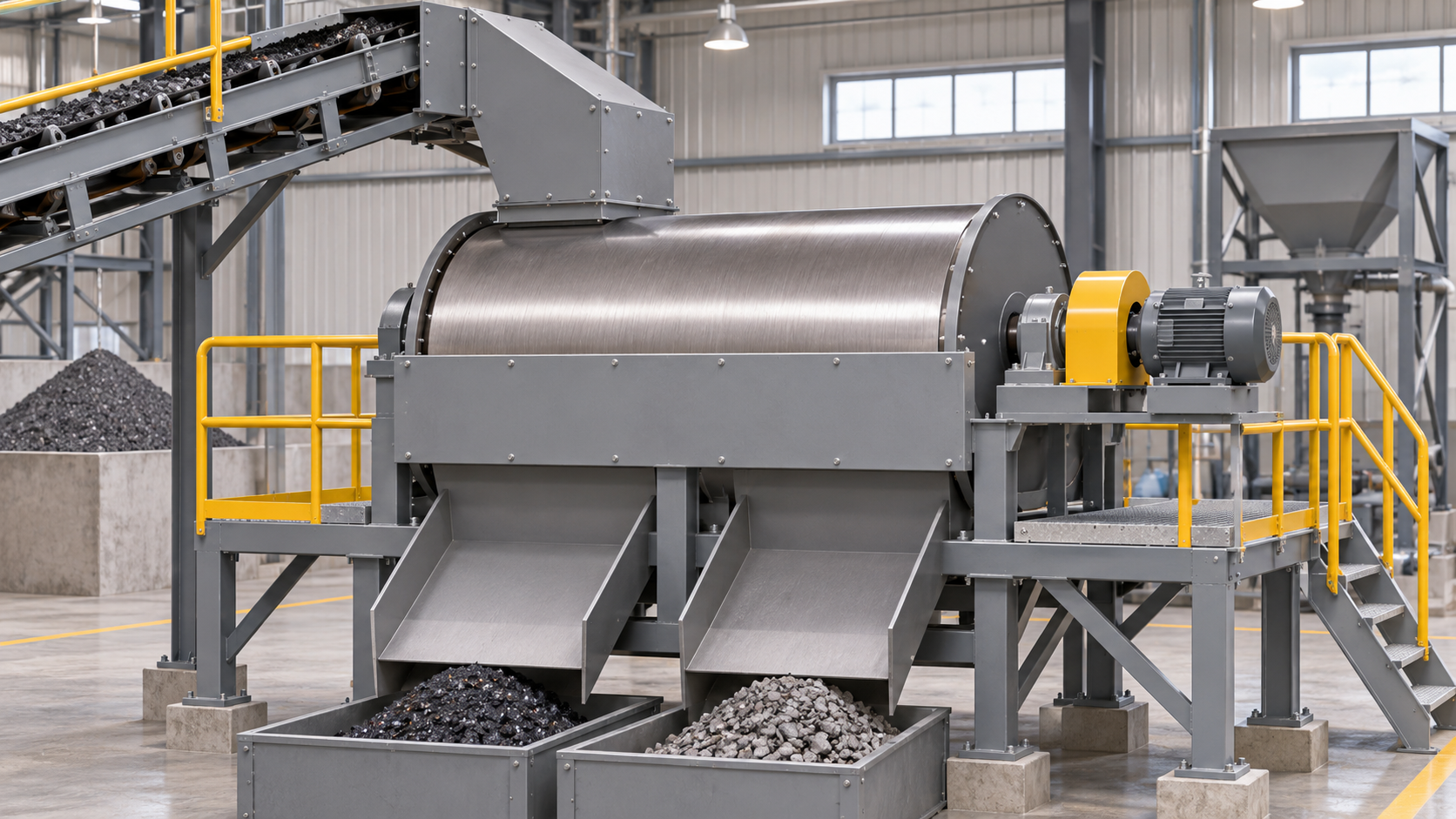
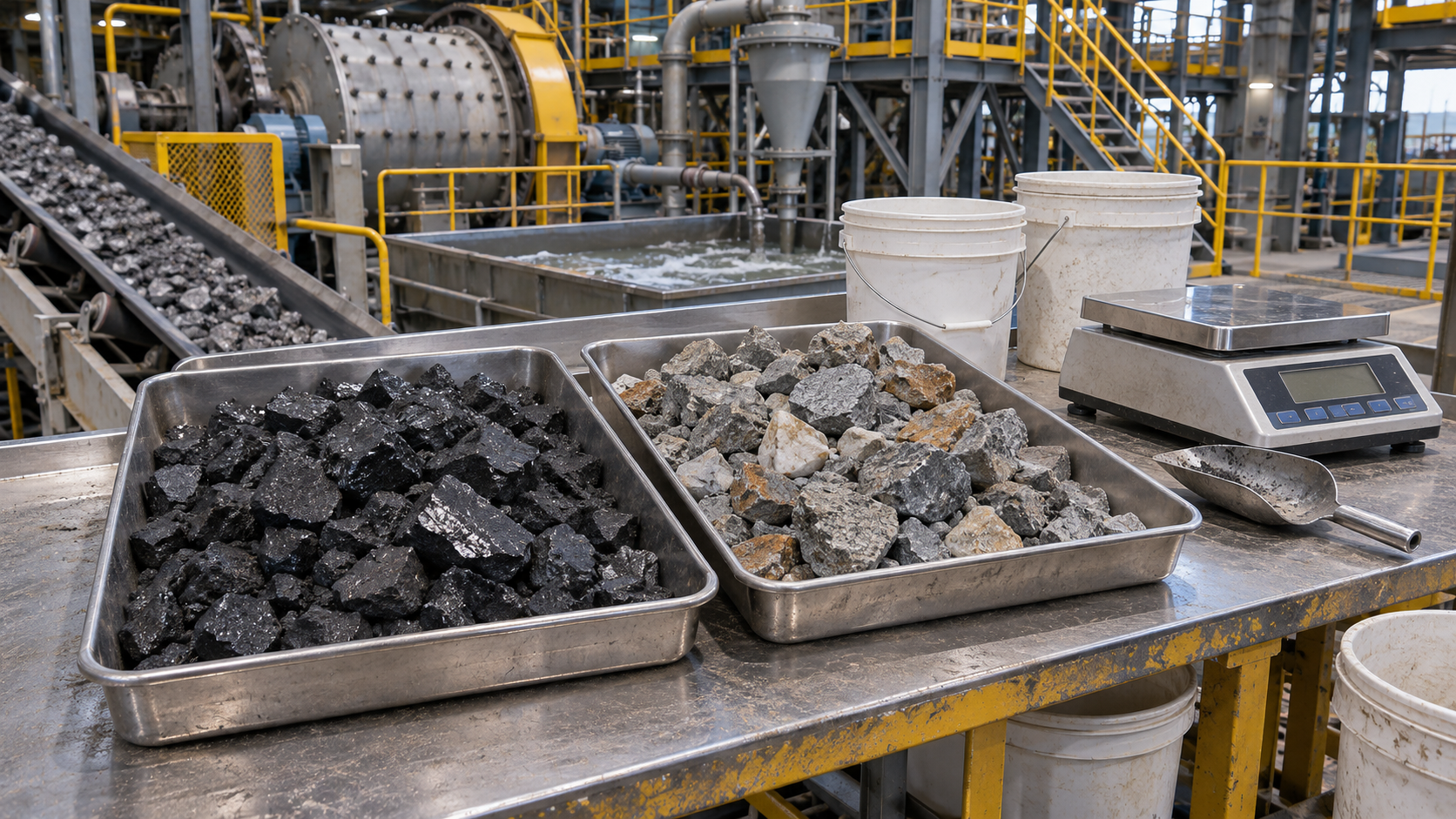
Collect matched feed, magnetic and reject samples during the same stable interval. Measure moisture and report dry mass. Agree with the laboratory on how to quantify magnetite or magnetite-bound iron and report total iron separately. For each run, calculate dry reject mass divided by dry feed mass, and magnetite in the reject divided by magnetite in the feed. Reconcile the stream balances before interpreting either ratio. Include any bypass stream when calculating the combined feed to the mill.
Use the size-by-size results to plan the next test
| Observation | What to check | Next comparison |
|---|---|---|
| Magnetite loss is concentrated in coarse reject. | Examine coarse reject for magnetite locked with gangue. | Compare a finer crush with selective recrushing of the coarse fraction. |
| Fine reject loss rises during damp runs. | Inspect feed for agglomerates and check distribution across the drum. | Repeat at the same settings with controlled moisture and a separate fines bypass trial. |
| Loss rises as feed rate increases. | Check for a deeper or uneven feed bed across the drum width. | Repeat at stable feed rates with controlled distribution before setting the design loading. |
| Reject mass falls when recovery improves. | Check how much additional gangue returns to the mill. | Compare the cost and downstream recovery at both operating points. |
Compare both routes at the same final product specification
Run downstream grinding and separation tests on the retained stream, including any bypass material, and on a representative whole-feed baseline. Use the same final concentrate specification and report overall recovery from the original feed. Compare grinding energy per tonne of original ore at those conditions. Include the incremental crushing, screening, separation and reject handling in the operating cost estimate. The retained material may grind differently from the original feed, so a drop in mill feed tonnage alone cannot quantify the savings.
Put the demonstrated operating range in the purchase specification
Define feed size distribution, moisture range, feed rate and the ore domains covered by the test. Ask each supplier to state how it will control feed distribution and how it will sample both discharge streams. Specify the acceptable magnetite loss and the minimum dry mass rejection together, along with the required test duration and balance closure. Define when operators should divert feed around the cobber if incoming ore falls outside the tested range. This gives operations a response to off-spec feed and gives procurement a consistent basis for comparing bids.
mj
Author & industry specialist at ZWCC Mining & Crushing