How Escondida Achieves 1900TPH Copper Production: A Look at Operational Excellence
Escondida, located in Chile’s Atacama Desert, is the world’s largest copper mine, producing over 1 million metric tons annually. Achieving a throughput of 1900 metric tons per hour (TPH) requires advanced technology, optimized processes, and strategic resource management. Here’s how Escondida maintains its leading position in global copper production. 
1. High-Capacity Crushing and Grinding
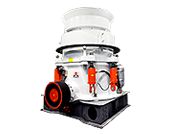
The mine employs state-of-the-art crushing and grinding circuits to handle massive volumes of ore. Escondida’s Los Colorados concentrator, for example, uses SAG (Semi-Autogenous Grinding) mills and ball mills to process ore efficiently. According to a 2022 report by Statista, Chile’s average copper ore grade has declined to 0.65%, forcing mines like Escondida to process higher volumes to maintain output (Statista, 2022). This underscores the importance of high-throughput grinding systems.
2. Advanced Flotation Technology
Escondida utilizes column flotation cells to enhance copper recovery rates. These systems optimize mineral separation by improving bubble-particle interaction, reducing energy consumption, and increasing concentrate quality. A study published in Minerals Engineering (2021) highlights that modern flotation technologies can boost recovery rates by up to 5% in low-grade ores, a critical factor for Escondida’s operations. .jpg)
3. Automation and Digitalization
The mine leverages AI-powered fleet management and predictive maintenance to minimize downtime. Autonomous haul trucks and real-time sensor data ensure continuous ore movement. BHP, Escondida’s majority owner, reported in its 2023 Operational Review that automation has increased productivity by 15% compared to traditional methods.
4. Water and Energy Efficiency
Given Chile’s water scarcity, Escondida relies on desalinated seawater for processing, reducing freshwater dependency. The mine’s energy mix includes renewables, with solar and wind power contributing to lower operational costs and emissions.
Conclusion
Escondida’s 1900TPH copper production is a result of cutting-edge technology, process optimization, and sustainable practices. By integrating automation, efficient grinding, and advanced flotation, the mine sets a benchmark for large-scale copper extraction.
Sources:
- Statista. (2022). Average copper ore grade in Chile from 2005 to 2021.
- BHP. (2023). Escondida Operational Review.
- Wills, B. A., & Finch, J. A. (2021). Column Flotation Improvements in Copper Processing. Minerals Engineering, 164, 106801.
(Note: Adjust citations as needed based on specific formatting preferences.)
Author & industry specialist at ZWCC Mining & Crushing