How to Choose the Right Jaw Crusher for 100 TPH Granite Processing in Brazil
A 100 TPH granite line needs a jaw crusher that fits the feed, the downstream circuit, and the way the quarry actually operates. The right primary crusher is not simply the model with the largest catalogue rating. It must accept the largest rock reliably, work at a practical closed-side setting, and deliver stable material to the next conveyor, screen, or secondary crusher.
For a granite-processing project in Brazil, start with representative site data. Granite can be hard and abrasive, while the feed shape and natural fines can change from bench to bench. A clear selection process prevents the primary stage from becoming the bottleneck in a 100 TPH plant.
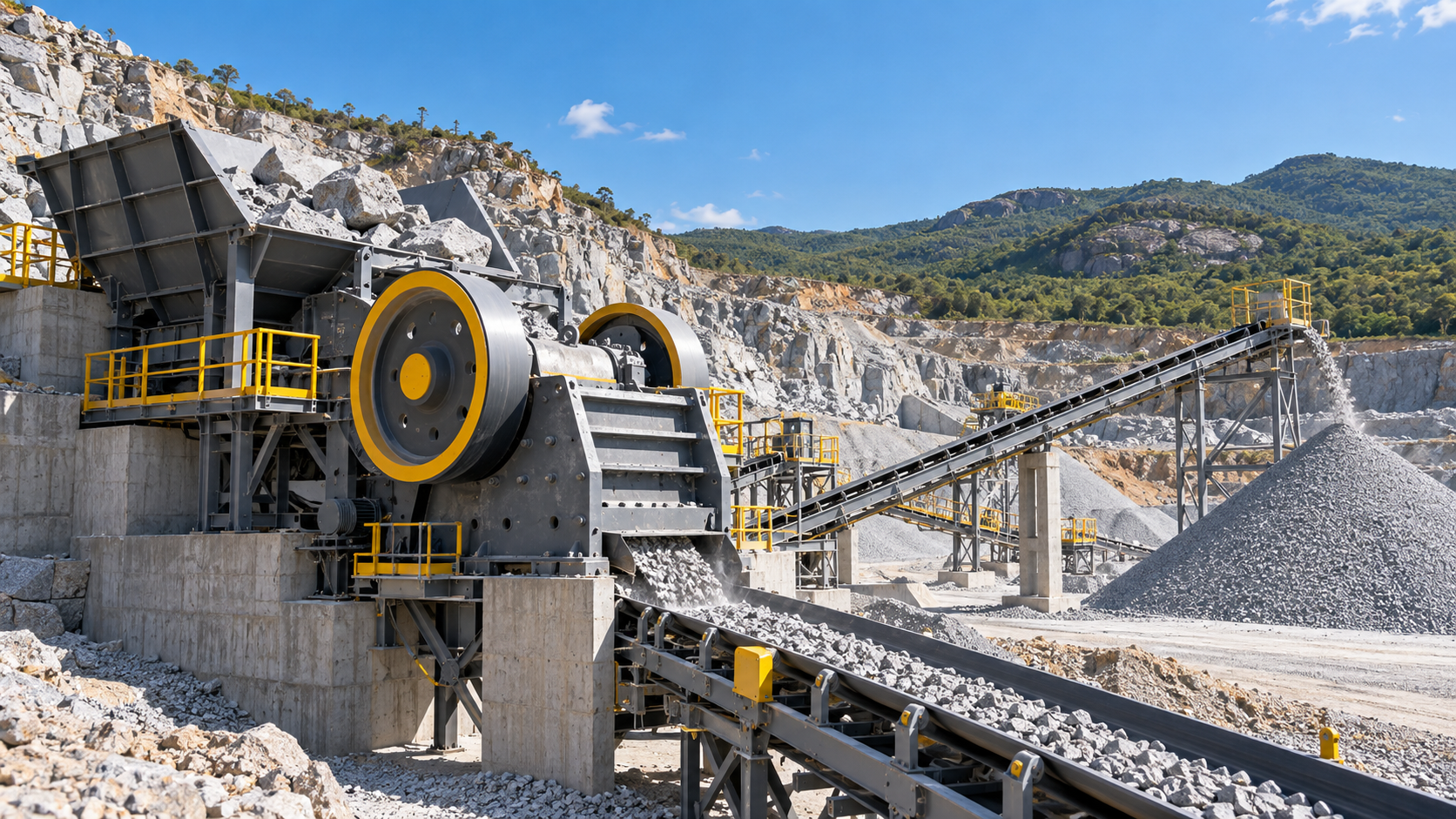
Define the real production target
“100 TPH” should describe an operating target, not just a peak number on a brochure. Confirm whether it is the average feed rate, the required finished-product rate, or a short-term maximum. The difference matters because plant availability, material variation, and screen efficiency all influence the capacity that reaches the finished stockpile.
Build the selection around the full process: hopper, feeder, jaw crusher, conveyor, screening, secondary reduction if used, and product storage. Each item must handle the expected flow. A primary jaw crusher with more capacity than the feeder or discharge conveyor will not improve output; it can instead create surges, spillage, and uneven downstream loading.
Measure feed size and granite characteristics
Record the largest rock expected after blasting or excavation, together with a representative feed-size distribution. The maximum dimension is especially important because irregular stones need clearance to enter the crusher chamber without bridging. Do not select the feed opening from the average size alone.
Also assess the granite for hardness, abrasiveness, moisture, and clay contamination. These properties affect jaw-plate wear, chamber choice, feeder behavior, and maintenance planning. Testing a representative sample or reviewing reliable site data is more useful than assuming that all granite behaves the same way.
Use a feeder to protect steady throughput
A vibrating grizzly feeder is often a valuable part of a 100 TPH primary stage. It meters rock into the jaw crusher, removes natural fines when appropriate, and helps avoid sudden peaks that reduce crushing efficiency. Consistent feed distribution supports more predictable capacity and liner wear.
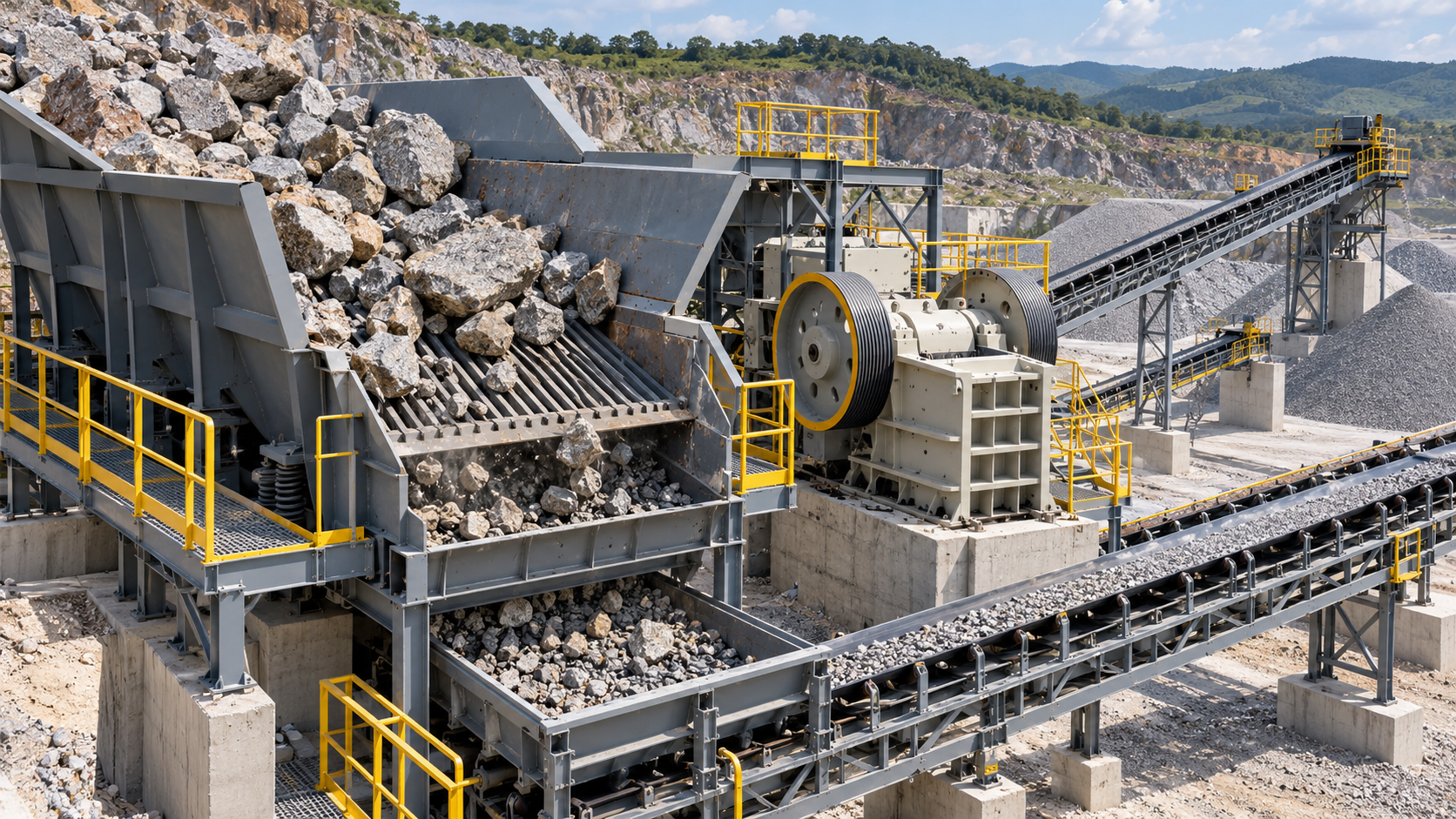
Set the feeder and hopper so operators can manage occasional oversize material safely. The arrangement should allow inspection and clearing under established lockout procedures, while keeping people away from moving equipment and suspended loads.
Balance feed opening, chamber, and CSS
The feed opening must suit the largest expected granite pieces with a practical allowance for their shape. Once the opening is suitable, select a chamber and closed-side setting (CSS) that produce an appropriate discharge for the next stage. A smaller CSS can make the discharge finer, but it may also reduce throughput and increase wear. A larger CSS can raise capacity while sending a coarser product downstream.
The best setting is therefore a system decision. Check the next crusher or screen requirement, then verify that the jaw crusher can work steadily at that setting with the actual feed. Avoid trying to force all reduction into the primary machine if a well-balanced secondary stage is available.
100 TPH granite jaw crusher selection checklist
| Selection area | What to verify | Effect on the line |
|---|---|---|
| Feed opening | Largest rock size and shape | Reduces bridging risk and supports reliable feeding. |
| Material condition | Granite hardness, abrasiveness, moisture, and fines | Guides chamber, liner, and feeder configuration. |
| Plant throughput | Average target and expected peak demand | Aligns feeder, crusher, conveyors, and screens. |
| Closed-side setting | Required feed to the next processing stage | Balances discharge size, capacity, and wear. |
| Service access | Lifting points, inspection space, lubrication, and spares | Supports safer maintenance and dependable uptime. |
Plan for wear and maintenance from the start
Granite can place significant demand on jaw plates and other wear surfaces. Choose liner material and profile according to the expected feed, and keep an organized spare-parts plan. Track jaw-plate condition, bearing temperature, lubrication, vibration, and power draw so changes in machine behavior are identified early.
Before finalizing a model, review access to wedges, liners, drive components, bearings, and lubrication points. A crusher that is simple to inspect and maintain can be a stronger long-term choice than one that only looks attractive on initial purchase price.
FAQ
What jaw crusher size is suitable for a 100 TPH granite plant?
Size it from the maximum feed dimensions, feed gradation, required discharge, rock characteristics, and the capacity of the surrounding equipment. A manufacturer should confirm the proposed opening, chamber, and setting using representative granite data.
Can a jaw crusher produce final granite aggregate?
It can provide primary reduction, but many aggregate circuits use screening and a secondary stage to control final shape and gradation. The best arrangement depends on the finished-product specification and the available feed.
Why does consistent feeding matter?
Even feed helps the jaw crusher use its chamber effectively, improves capacity stability, and reduces avoidable surges and wear. A correctly selected feeder is part of the crusher selection, not an afterthought.
Conclusion
For 100 TPH granite processing in Brazil, select the jaw crusher as part of a balanced line. Start with reliable feed and material data, match the opening and CSS to the downstream process, use controlled feeding, and plan maintenance access before commissioning. These steps create a safer primary stage and a more dependable route to the required production target.