.jpg)
Setting up a 920TPH basalt processing line in Saudi Arabia requires careful planning, site-specific engineering, and a solid understanding of both the raw material characteristics and regional operational conditions. Basalt, known for its hardness and abrasiveness, demands a robust and efficient plant configuration to ensure consistent output, minimal wear, and optimal energy use. Below is a practical guide to configuring such a high-capacity processing line tailored to Saudi Arabia’s geological and logistical environment.
The first step is conducting a thorough geological survey of the basalt quarry. In Saudi Arabia, basalt deposits vary in hardness, moisture content, and fracture patterns. Core samples should be analyzed to determine compressive strength, silica content, and abrasion index. This data informs crusher selection and wear part lifespan estimates..jpg)
Given the target capacity of 920 metric tons per hour, the processing line should follow a three-stage crushing approach: primary, secondary, and tertiary crushing, followed by screening and stockpiling. A typical flow begins with a vibrating feeder and jaw crusher as the primary stage. For basalt, a heavy-duty primary jaw crusher with a feed opening of at least 1100×700 mm is recommended to handle large boulders directly from the quarry face. The vibrating feeder ensures even material flow and protects the crusher from surges.
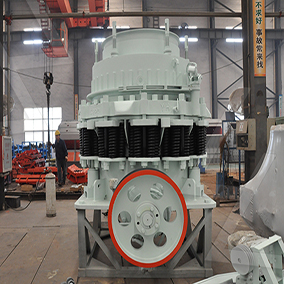
After primary crushing, the material moves to secondary crushing, where a cone crusher is ideal due to its ability to handle hard rock and produce consistent particle shape. A multi-cylinder hydraulic cone crusher with medium to fine cavity settings works well here. At this stage, maintaining a closed-side setting (CSS) that balances throughput and product size is critical. For a 920TPH line, two secondary cone crushers may be considered in parallel to manage peak loads and provide redundancy.
Tertiary crushing further refines the aggregate, especially if the end product requires high-quality, cubical particles for concrete or asphalt applications. Another cone crusher, optimized for fine crushing, should follow the secondary stage. Alternatively, a vertical shaft impactor (VSI) can be used to enhance particle shape, particularly for premium construction aggregates common in infrastructure projects across Saudi Arabia.
Screening is essential at multiple points. A primary scalper screen placed after the jaw crusher removes fines and prevents clogging. Secondary and tertiary screens should be inclined vibrating types with multiple decks to classify output into standard sizes such as 0–5 mm, 5–10 mm, 10–20 mm, and 20–31.5 mm. Modular screen units with replaceable panels offer flexibility and ease of maintenance.
Conveyor systems must be designed for durability. In Saudi Arabia’s hot, dusty climate, belt conveyors should feature sealed bearings, UV-resistant covers, and proper belt tracking systems. Transfer points need dust suppression solutions, such as water sprays or enclosed chutes, to comply with environmental standards and protect worker health.
Dust control is a major consideration. Enclosed crushers, baghouse filters, and water spray systems at transfer points help minimize airborne particles. Saudi regulations on air quality and workplace safety require effective dust management, especially in areas near residential zones or urban developments.
Power supply and fuel logistics must be planned. Most processing lines in remote areas rely on diesel generators or hybrid power solutions. For a plant of this size, connection to the national grid—where feasible—reduces long-term operating costs. Electrical systems should include variable frequency drives (VFDs) on motors to optimize energy consumption and reduce mechanical stress during startup.
Maintenance infrastructure is crucial. Spare parts storage, on-site welding capability, and trained technicians ensure minimal downtime. Given the abrasive nature of basalt, wear parts like mantle and bowl liners, jaw plates, and screen meshes should be stocked regularly. Partnering with local suppliers or establishing service agreements with OEMs improves response time.
Lastly, compliance with Saudi Arabian standards—such as SASO (Saudi Standards, Metrology and Quality Organization)—is mandatory. Final products must meet specifications for construction aggregates, including grading, cleanliness, and strength. Regular lab testing ensures quality control..jpg)
In conclusion, a 920TPH basalt processing line in Saudi Arabia should prioritize reliability, efficiency, and adaptability to local conditions. By selecting appropriate crushing equipment, integrating effective screening and dust control, and planning for maintenance and compliance, operators can achieve consistent production and meet the growing demand for high-quality aggregates in the Kingdom’s expanding construction sector.
Author & industry specialist at ZWCC Mining & Crushing
.jpg)
.jpg)