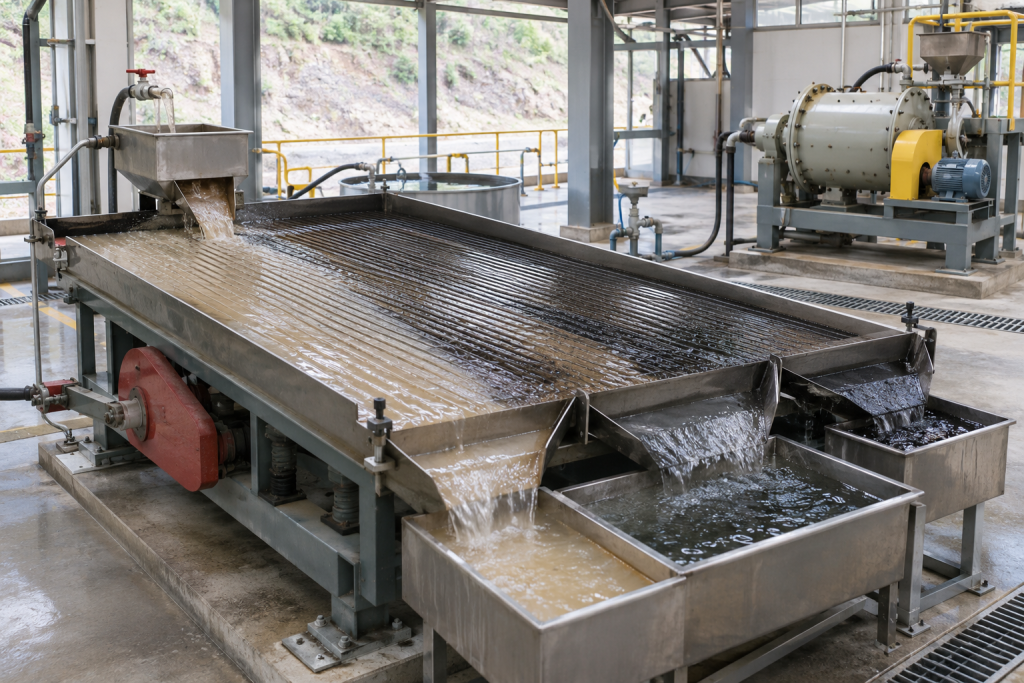
A shaking table can send a meaningful share of the tin in hard-rock cassiterite ore to middlings, the stream between concentrate and tailings. A regrind mill may release cassiterite still locked in gangue, but it can also turn already liberated grains into fines that the table struggles to recover. Before specifying a mill, split a representative middlings sample and compare direct retreatment with controlled regrinding followed by retreatment. Use timed cuts, dry weights and tin assays to account for every stream, including fines carried away in wash water. Judge each route by incremental tin recovered at the required concentrate grade and by the added load on the gravity circuit. The result gives procurement a mill duty based on the fraction that benefits from grinding and the tonnage that fraction actually represents.
Find out why tin reports to middlings
Take timed cuts of the table feed, concentrate, middlings and tailings under steady conditions. Repeat across the ore blends expected in production and keep each blend identifiable. Record dry solids flow, feed pulp density, wash water flow, deck slope, stroke settings and splitter positions. Check whether a change in loading or splitter position moved liberated cassiterite into middlings. In that case, table adjustment or a second pass may recover some of the tin without added milling capacity.
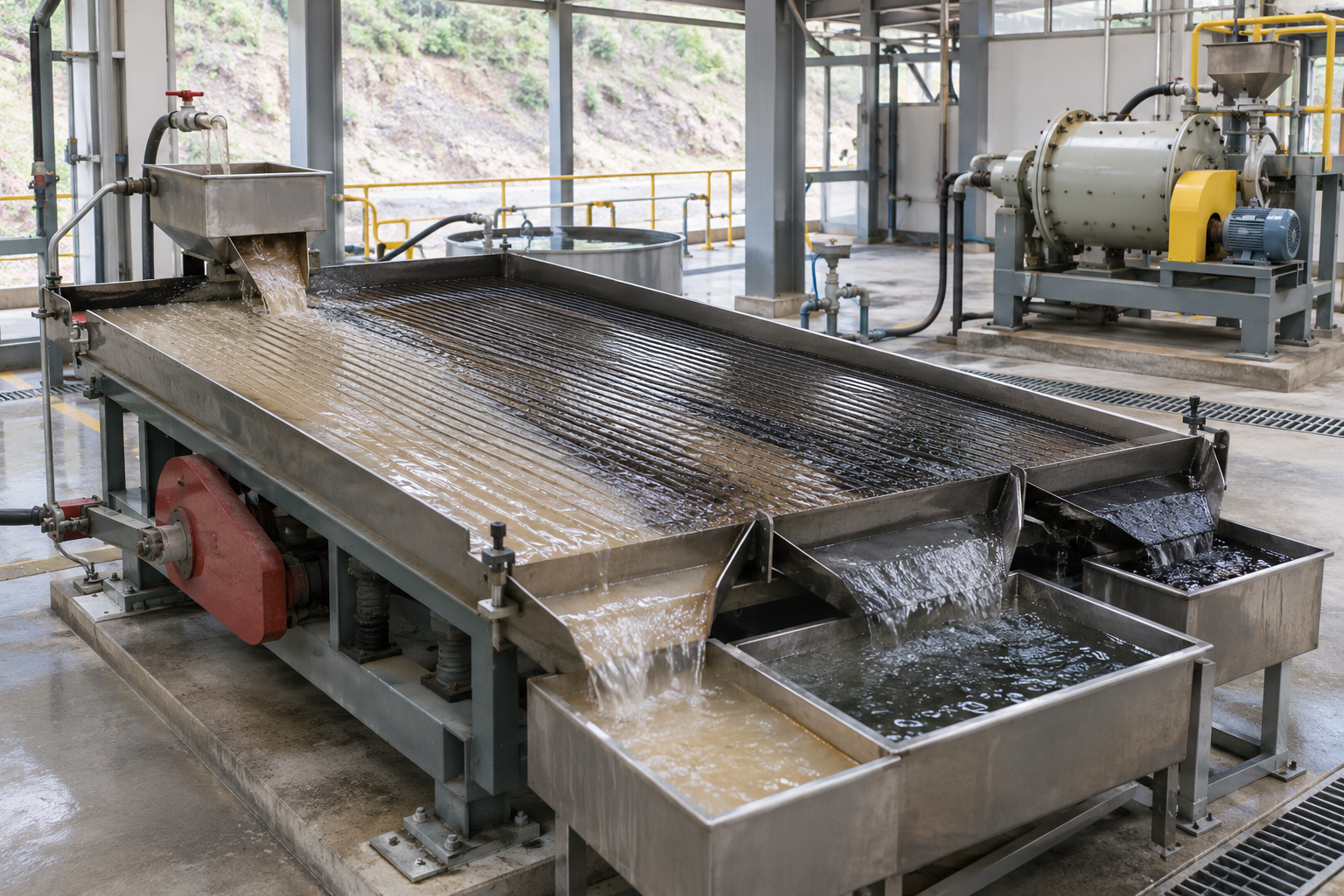
Keep the sample boundary at the gravity circuit. The site guides to the tin processing flowsheet in Nigeria and tin ore crushing configuration in Peru cover broader plant and upstream equipment choices. Regrind duty depends on the material actually reporting to the middlings launder.
Measure tin distribution and liberation by size
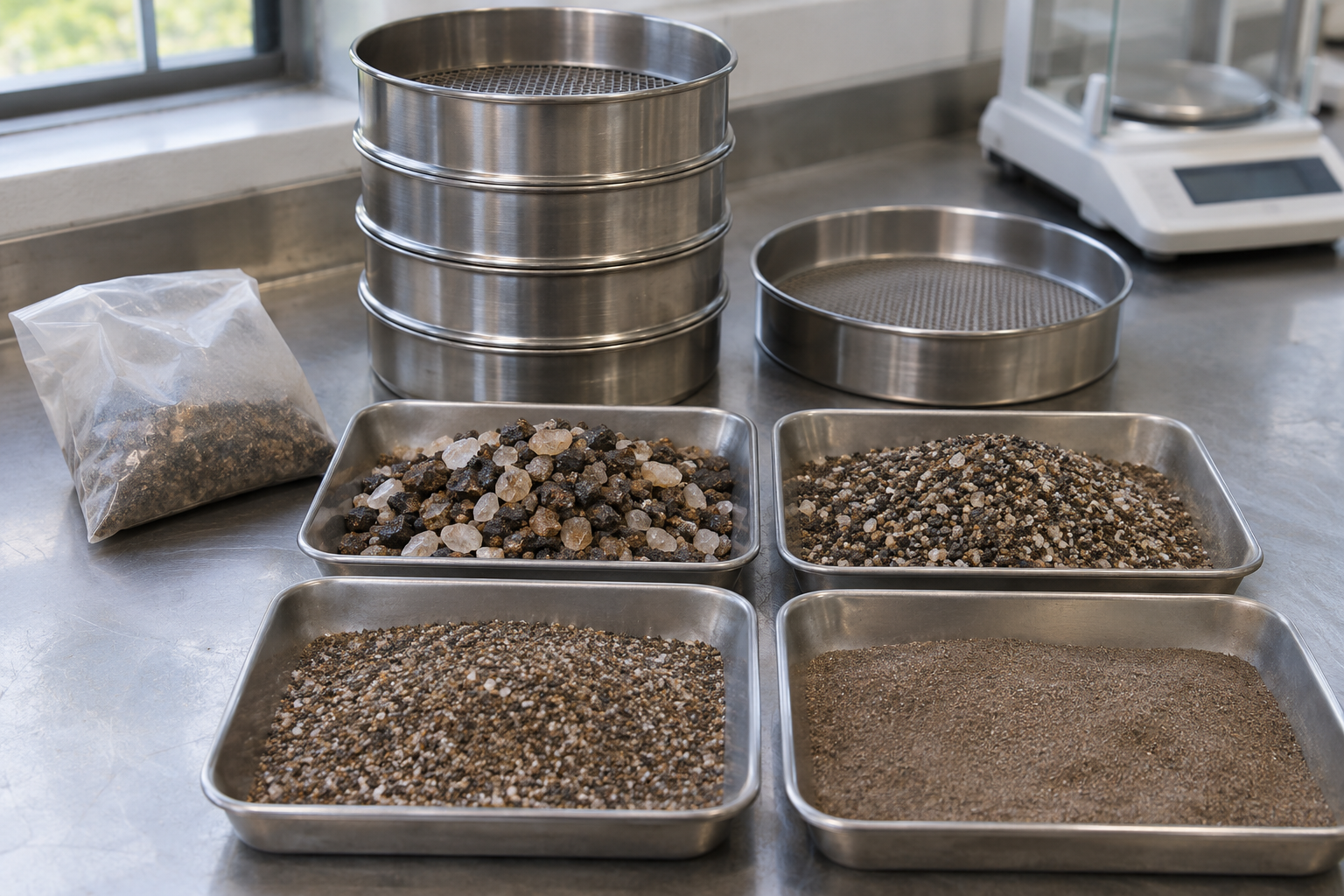
Wet-size the sample, retain the finest fraction and assay each fraction for tin on a dry basis. Multiply dry mass by tin grade to see how much tin each size band carries. Ask for mineralogical examination of the fractions with substantial tin inventories to establish whether the cassiterite is free, partly exposed or locked in composite particles. Choose the size cuts from the ore and the table’s demonstrated operating range. A single grind percentile can hide an increase in the fine fraction.
Compare direct retreatment with selective regrinding
Prepare matched splits of each middlings composite. Retreat one split at its existing size distribution as the baseline. In the other split, test controlled grind steps on the size fractions shown to contain locked cassiterite. Keep the bypass fractions in the balance and establish a recovery route for them. Use the same feed and water settings for comparable size bands, and document any changes when the ground material requires a different table setup. Compare each route at the same concentrate grade or the same agreed product specification.
| Observed in the test | Check before deciding | Equipment decision |
|---|---|---|
| Direct retreatment recovers liberated tin at the required grade | Repeat at design loading and check table capacity | Evaluate a dedicated retreatment deck or spare capacity on the existing circuit |
| Controlled grinding increases recovery from a coarse composite fraction | Verify the gain at matched grade and check the tin inventory in the new fines | Size classification and regrinding for the selected fraction |
| Finer grinding shifts tin into wash water solids or fine tailings | Assay those solids and compare the loss with the extra tin in concentrate | Use the coarser grind or evaluate a dedicated fine recovery stage separately |
| Middlings accumulate during a repeat recycle test | Measure circulating dry solids, tin and water at steady operation | Confirm mill, pump and table capacity or revise the recycle route |
Close the tin balance before comparing bids
Collect concentrate, retreatment middlings, tailings and any waterborne solids leaving the test boundary. Report unaccounted dry mass and tin against agreed closure tolerances. Use the difference in tin mass recovered by the routes, including bypass products, to compare them. Express the gain against both the original middlings tin and the fresh gravity feed tin. Count recycled middlings as internal material until the tin leaves in a product or a reject. A locked-cycle or continuous pilot test can confirm whether that recycle reaches a stable load.
Specify the classifier, mill and return circuit together
Give bidders the measured range of dry solids flow to the mill, including return load, and the feed size distribution and ore grindability. Specify the product size distribution, including an allowable fines fraction, along with water demand and the concentrate grade and incremental tin recovery to be demonstrated. Ask vendors to identify the classifier cut, capacity for each return stream, sampling points and acceptance test conditions. If the pilot cannot show a repeatable net recovery gain, keep the regrind mill out of the base scope and price it as an option.
mj
Author & industry specialist at ZWCC Mining & Crushing