Project Overview
Many Nigerian quarry operators across Lagos, Abuja and Port Harcourt search for reliable crushing machines to process hard river stone into standard construction aggregates. Local river pebbles feature high compressive hardness (180–260 MPa), heavy abrasion and high mud content, paired with unique Nigerian site pain points: unstable grid power, tropical heavy rainfall, strict quarry environmental regulations and poor rural transport roads. This article breaks down core site challenges, introduces matched multi-stage crushing equipment, compares process configurations for river stone aggregate production, shares Nigeria-specific customized adaptations, and answers frequent local operational questions to help investors select cost-effective, durable crushing lines.
Core Pain Points of Hard River Stone Quarrying in Nigeria
1. Material characteristic wear challenges
Natural river stones are smooth, ultra-hard and highly abrasive. Single impact crushers suffer rapid blow bar loss, leading to frequent shutdowns and soaring spare part costs. Mud wrapped on pebble surfaces easily blocks crusher cavities and vibrating screens, especially during rainy seasons with 3,000–4,000 mm annual rainfall in southern Nigeria.
2. Power supply instability
Most remote quarry sites lack stable national grid power. Operators rely on diesel generators for full production, which pushes fuel costs to nearly 40% of total daily operation expenses. Equipment with high power consumption will drastically reduce profit margins.
3. Strict local environmental compliance rules
Nigeria’s National Environmental Quarry Regulations require enclosed dust suppression, noise reduction and water recycling systems within 1,000 meters of residential zones. Open-type crushing equipment triggers regulatory fines and temporary production suspensions without supporting dust control kits.
4. Infrastructure and transport limits
Narrow unpaved rural roads restrict oversize machine delivery. Small-scale quarry plots cannot support heavy fixed foundation construction, while scattered river stone deposits increase frequent site relocation demands.
Targeted Machine & Process Solutions for Nigerian Hard River Stone Aggregates
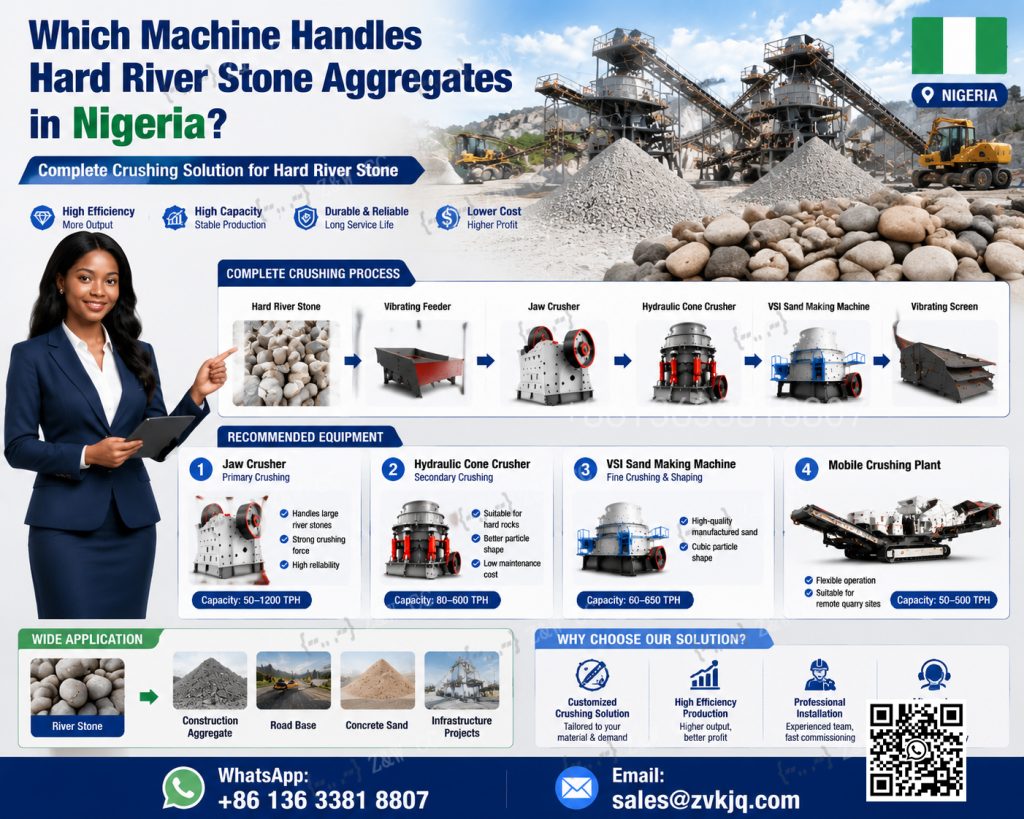
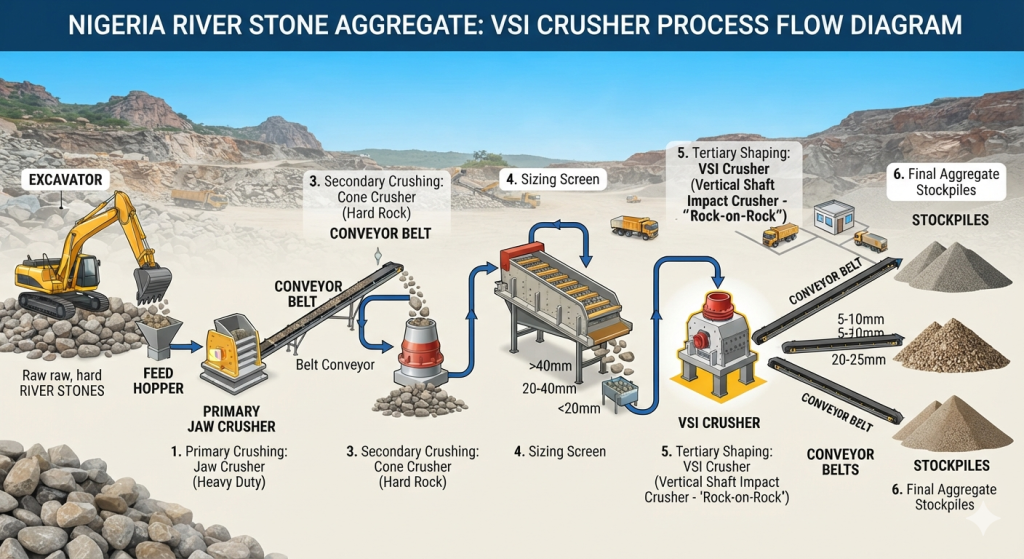
Hard river stone cannot rely on single crushing equipment; a three-stage closed-circuit jaw-cone-VSI combination is the standard efficient configuration for high-quality cubical aggregates. Separate processing schemes are listed below, with clear parameter comparison for local investors.
Primary Crushing: Jaw Crusher (Coarse Breaking Station)
Jaw crushers act as the first processing unit for raw river stone boulders up to 600 mm. High manganese steel jaw plates resist abrasion from hard pebbles, with adjustable discharge gaps to deliver uniform mid-sized feed for secondary crushing.
Recommended model for Nigeria sites: PE 600×900
- Max feed size: 500 mm
- Hourly capacity: 50–160 tph
- Matched generator power: 75 kW diesel unit
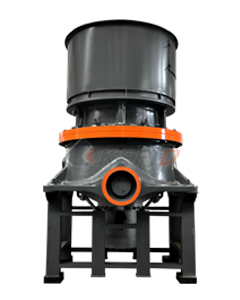
Secondary Crushing: Hydraulic Cone Crusher (Medium Fine Breaking Core)
Cone crushers are the core machine for hard river stone processing, far superior to impact crushers in wear resistance and energy efficiency. Single-cylinder hydraulic cone types suit small/medium Nigerian quarries, while multi-cylinder versions fit large-scale production lines above 150 tph.
| Comparison Item | Single Cylinder Hydraulic Cone | Multi Cylinder Hydraulic Cone |
|---|---|---|
| Applicable capacity | 50–120 tph | 130–260 tph |
| Wear part replacement cycle | 280–350 working hours | 220–280 working hours |
| Fuel consumption per ton | 0.8–1.1 L diesel | 1.0–1.3 L diesel |
| Best for Nigeria sites | Small quarries, limited budget | Large commercial aggregate yards near Lagos |
Tertiary Shaping & Sand Making: VSI Vertical Shaft Impactor
After cone crushing, VSI machines reshape irregular fragments into cubical aggregates (5–20 mm) and produce manufactured sand (0–5 mm) to offset local river sand shortages. Closed-circuit vibrating screens return oversize materials back to the VSI for reprocessing, eliminating waste.
Complete River Stone Aggregate Production Flow (Nigeria Standard)
Vibrating grizzly feeder → Jaw primary crusher → Belt conveyor → Cone secondary crusher → Circular vibrating screen → VSI fine shaping machine → Finished aggregate stockpile
Distinction from metal ore processing: River stone aggregate lines skip magnetic separation/flotation modules, while metal mineral processing requires extra magnetic and gravity separation equipment to extract metal concentrates.
Nigeria-Site Customized Adaptation Design
1. Tropical rainfall & mud handling upgrade
All feeders and screening machines add high-pressure water washing modules and dewatering screens to remove river stone mud; machine housings use anti-rust thickened steel plates to resist long-term high humidity corrosion in Delta and Rivers State.
2. Off-grid diesel power matching
Every complete crushing line supports dual power switching (grid + diesel generator). Low-energy optimized cone and jaw models cut diesel consumption by 15% compared to ordinary equipment, easing Nigeria’s high fuel cost pressure.
3. Local environmental regulation matching
Full set enclosed dust hoods, water spray dust suppression and silencer kits come as standard delivery. Zero-circulation water tanks recycle washing water to meet EIA certification requirements for Nigerian quarry leases.
4. Transport & site layout adaptation
Modular split machine frames fit narrow rural truck transportation without wide-load permits. Semi-mobile chassis options remove heavy concrete foundation needs, ideal for scattered river stone deposit zones with frequent relocation.
Frequently Asked Questions for Nigerian River Stone Quarry Operators
Q1: Can I use impact crushers alone to process hard river stone in Nigeria?
No. Impact crushers have extremely short blow bar service life against high-hardness river pebbles, doubling monthly spare part expenditure. Jaw + cone combination is the cost-efficient mainstream choice for local hard aggregate production.
Q2: What hourly capacity machine set fits small family-run quarries in Northern Nigeria?
A 50–80 tph PE600×900 jaw + single cylinder cone + VSI mini production line matches small-scale sites, requiring only one 120 kW diesel generator and occupying a compact 600㎡ plot.
Q3: How to avoid regulatory fines for dust pollution when crushing river stone near residential areas?
Select fully enclosed crushing modules with automatic water mist dust suppression, build a closed washing water circulation tank, and submit supporting equipment parameter documents during EIA application to comply with 2013 quarry environmental regulations.
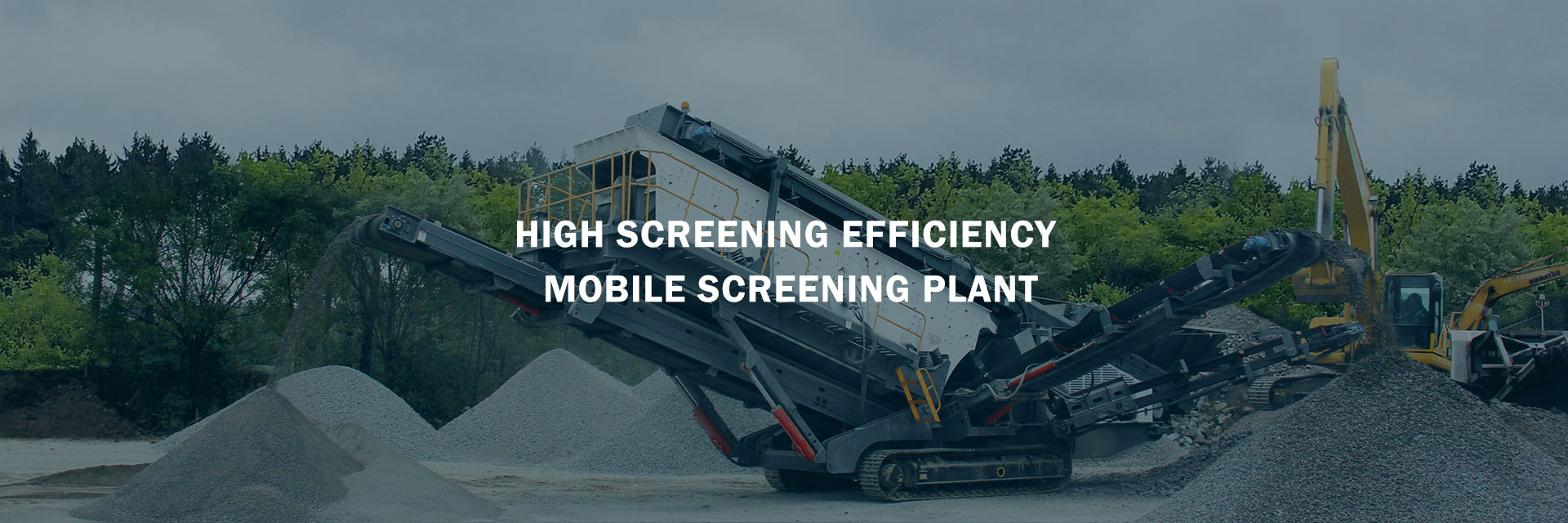
Q4: Is mobile crushing plant better than fixed line for scattered river stone deposits along Nigerian river basins?
Mobile plants save repeated foundation construction fees but carry higher hourly fuel consumption. If your deposit stays fixed for over 2 years, fixed jaw-cone lines deliver better long-term return on investment.
CTA Conclusion
Hard river stone aggregate production in Nigeria relies on matched jaw, hydraulic cone and VSI three-stage crushing machines instead of single lightweight equipment. Our technical team designs site-tailored production lines based on your raw stone hardness, target hourly output, local power conditions and environmental license demands. Contact our online technical consultant on the right sidebar to get free layout drawings, detailed equipment parameter sheets and customized quotation plans for your Nigerian river stone quarry project.
.jpg)