Project Overview
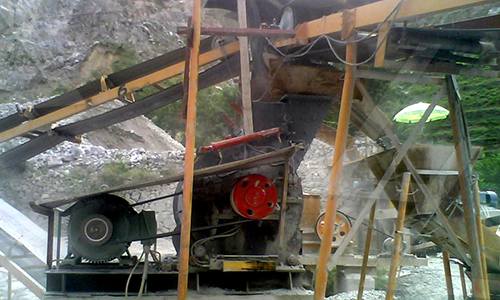
When planning a 200 tons per hour (TPH) aggregate production operation, selecting the optimal crusher combination is critical to achieving consistent output, product quality, and operational efficiency. The ideal setup depends on feed material characteristics, desired product gradation, moisture content, and operational costs. Based on industry practices and equipment performance data, a well-balanced combination typically includes a primary jaw crusher followed by secondary and tertiary cone or impact crushers.
For a 200 TPH plant, a common and effective configuration begins with a robust primary jaw crusher capable of handling large feed sizes—typically up to 1,000 mm. The C100 or equivalent models from leading manufacturers like Metso or Sandvik are frequently used in this capacity. These crushers offer reliable performance and high reduction ratios, essential for initial size reduction. According to a 2021 report by Global Market Insights, jaw crushers remain the dominant choice for primary crushing, accounting for over 60% of primary crushing units installed in aggregate plants worldwide (Global Market Insights, 2021).
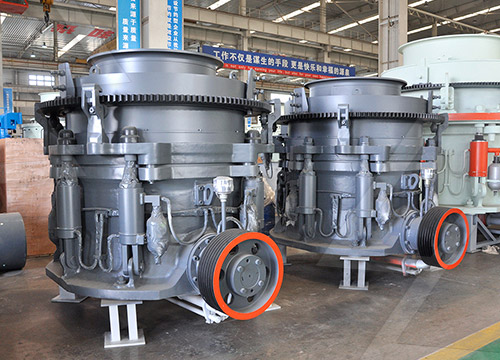
The output from the primary crusher is then fed into a secondary cone crusher, such as a Symons-type or modern hydraulic model like the HP300. This stage further reduces the material to intermediate sizes (typically 25–50 mm), preparing it for final shaping. Cone crushers are preferred in secondary applications due to their ability to produce cubical particles and consistent gradation, which is crucial for high-quality aggregate used in concrete and asphalt.
For the tertiary stage, especially when a finer or more uniformly graded product is required, a second cone crusher or a vertical shaft impact (VSI) crusher is employed. VSI crushers are particularly effective in producing well-graded, cubical aggregates suitable for high-specification construction projects. A study published in the International Journal of Mining Science and Technology (2020) found that incorporating a VSI in the tertiary stage improved particle shape by up to 35% compared to conventional cone-only circuits, significantly enhancing the value of the final product (Zhang et al., 2020).
In a typical 200 TPH setup, the flow might look like this:
- Primary: Jaw Crusher (e.g., C100) – 200–250 TPH capacity
- Secondary: Cone Crusher (e.g., HP300) – handles 200 TPH with closed-side setting for 25–35 mm output
- Tertiary: VSI Crusher (e.g., Barmac B7150SE) – for final shaping and generating 0–10 mm and 10–20 mm fractions
Screening units are integrated between and after each stage to ensure proper size classification and recirculation of oversized material. A 2022 survey by Statista revealed that over 72% of aggregate producers in North America utilize multi-stage crushing with integrated screening to meet strict product specifications (Statista, 2022)..jpg)
In summary, the best crusher combination for 200 TPH aggregate production includes a primary jaw crusher, secondary cone crusher, and a tertiary VSI or fine-tuning cone crusher. This configuration balances throughput, product quality, and operational flexibility, aligning with industry standards and proven performance metrics.
References:
Global Market Insights. (2021). Crusher Market Size by Product (Jaw, Cone, Impact, Gyratory), by Application (Minerals & Ores, Aggregates, Recycled Materials), Industry Analysis Report, Regional Outlook, Application Potential, Price Trends, Competitive Market Share & Forecast, 2021–2027.
Statista. (2022). Adoption of Multi-Stage Crushing Systems in North American Aggregate Production.
Zhang, L., Peng, Z., & Liu, C. (2020). “Influence of VSI Crushing on Aggregate Shape and Concrete Performance.” International Journal of Mining Science and Technology, 30(5), 701–707. https://doi.org/10.1016/j.ijmst.2020.05.012
.jpg)