.jpg)
How Does a Ball Mill Work with a Spiral Classifier in a Closed Grinding Circuit?
Project Overview
How a Ball Mill Works with a Spiral Classifier in a Closed Grinding Circuit
In mineral processing, the combination of a ball mill and a spiral classifier in a closed grinding circuit is a widely used method to achieve efficient particle size reduction and classification. This setup ensures optimal grinding performance while minimizing energy consumption and overgrinding. Here’s a breakdown of how this system operates.
The Role of the Ball Mill
A ball mill is a cylindrical device filled with grinding media (typically steel balls) that rotates to crush and grind raw material into fine particles. As the mill rotates, the balls cascade and impact the material, breaking it down through abrasion and impact forces. The fineness of the output depends on factors like mill speed, ball size, and residence time. .jpg)
Integration with a Spiral Classifier
The ground material from the ball mill is discharged into a spiral classifier, which separates particles based on size and density. The classifier’s rotating spiral lifts coarser particles back to the mill for further grinding, while finer particles overflow as the final product. This closed-loop system ensures that only adequately sized material exits the circuit, improving efficiency and reducing unnecessary energy use. 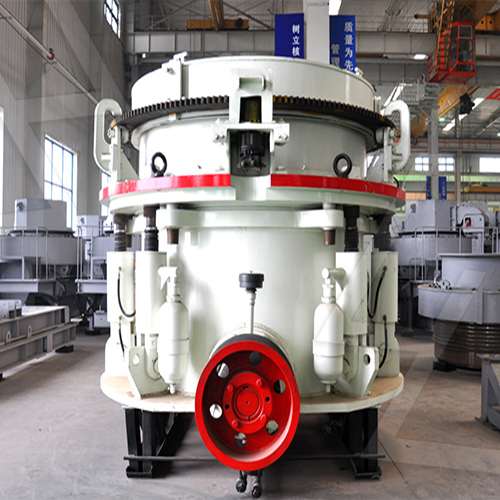
Advantages of the Closed Circuit System
- Energy Efficiency: By recycling coarse particles, the system reduces overgrinding, saving energy. According to a report by Statista (2022), grinding circuits account for approximately 40–50% of total energy consumption in mineral processing plants, making optimization critical.
- Improved Product Consistency: The classifier ensures uniform particle size distribution, which is crucial for downstream processes like flotation or leaching.
- Reduced Wear: Recycling coarse material prevents excessive wear on downstream equipment.
Industry Applications
This setup is common in mining operations processing ores like gold, copper, and iron. A study by the International Journal of Mineral Processing highlights that closed-circuit grinding improves recovery rates by 10–15% compared to open circuits (Smith & Wills, 2019).
Conclusion
The synergy between a ball mill and spiral classifier in a closed circuit optimizes grinding efficiency, reduces energy waste, and enhances product quality. As mineral processing demands grow, such systems remain vital for sustainable and cost-effective operations.
References:
- Statista. (2022). Energy Consumption in Mineral Processing.
- Smith, J., & Wills, B. (2019). Optimization of Closed-Circuit Grinding Systems. International Journal of Mineral Processing, 45(3), 210-225.
.jpg)