Granite Road Base Segregation: Test Stockpile Gradation Before Buying a Stacker
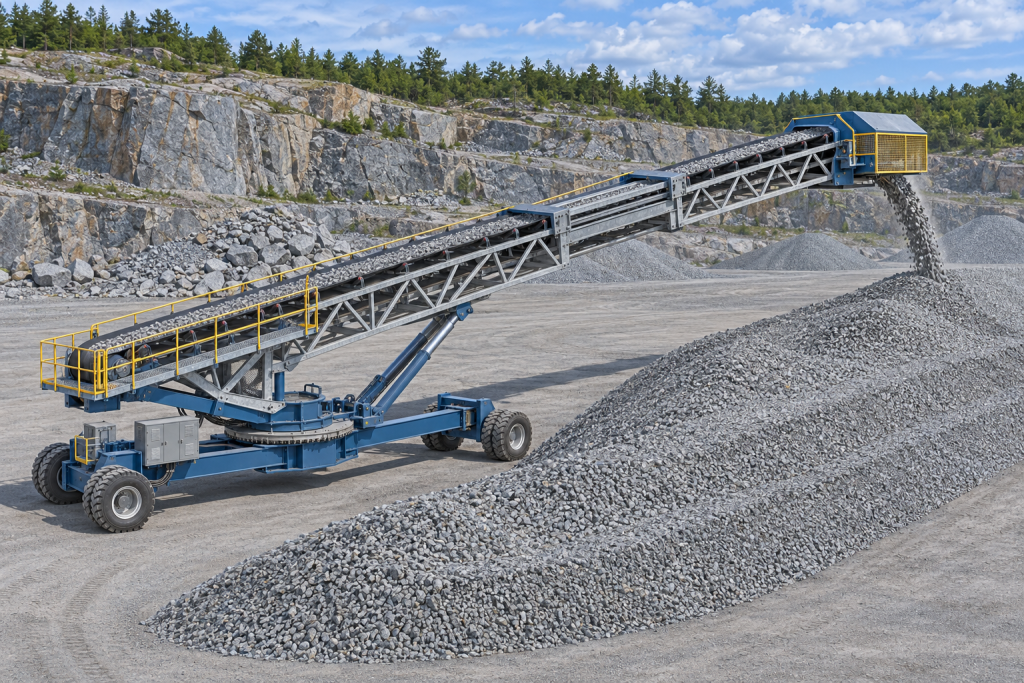
A granite crushing plant can produce graded road base within the specified sieve limits at the final product belt and still dispatch loads with inconsistent gradation. Coarse fragments can roll toward the toe of a tall pile, while finer material tends to remain closer to the discharge point. A loader that repeatedly works one part of the pile can carry that difference into the truck. Before buying a telescoping radial stacker, compare matched belt and loadout sieve results from a traceable lot. Then trial a lower discharge and a layered stacking pattern with a consistent reclaim method. This gives the engineering and procurement teams a basis for specifying the stacker travel, stockyard footprint, and loadout acceptance test around the gradation the customer actually receives.
Compare the Product Belt With Truck Loadout
Start at the final product belt after the last screening or blending point. Follow a marked production lot into a dedicated stockpile section and identify the trucks loaded from that section. Record the screen setup, feed blend, stacking pattern, and loader reclaim sequence. If older material remains in the reclaim area, isolate the trial lot or document where mixing occurs.
Use the project-approved sampling method at both points. A properly installed cross-stream sampler can collect belt increments without hand sampling a moving conveyor. At loadout, have the quality team collect representative increments using the approved procedure for the loading arrangement. Keep the individual truck or loadout interval results so an overall composite cannot hide excursions at a controlling sieve.
Trial the Stacking Pattern With the Existing Conveyor
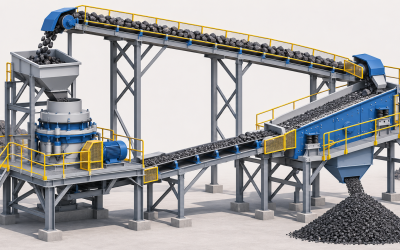
Where the equipment and pad allow it, reduce the drop at the conveyor head and advance the discharge point along the pad to form successive shallow layers. Compare this pattern with the current practice using the same product and reclaim method. Track the pile footprint, available live storage, and loader access alongside the sieve results. The quarry plant layout guide gives context for fitting the conveyor and stockyard into the overall site plan.
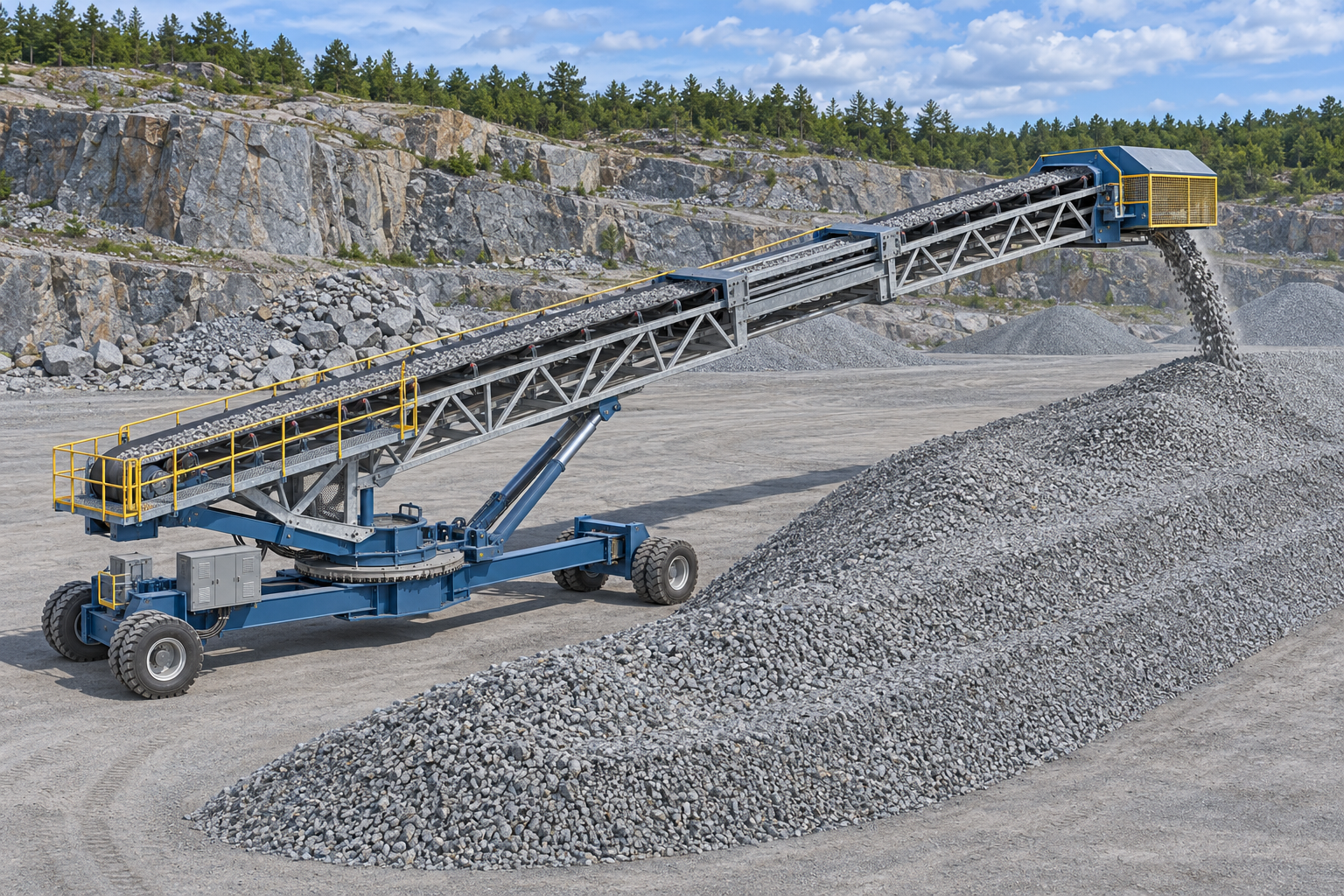
A telescoping radial stacker provides two ways to distribute material: sweeping across the pad and varying the discharge radius. Ask the supplier to show the discharge path over the actual yard boundary and the achievable drop height as the pile grows. FHWA field guidance describes how layered stockpiles can reduce segregation. FHWA field reference manual.
Use the Sieve Results to Locate the Problem
| Observed pattern | What to check next | Decision for the project team |
|---|---|---|
| Belt samples and truck loads both drift in the same direction. | Check feed blend, screen condition and product stream routing before the stockpile. | Stabilize upstream gradation and repeat the comparison before sizing new stacking equipment. |
| Belt samples are stable, but toe-side loads are consistently coarser. | Check the discharge drop, pile shape and whether the loader repeatedly works the toe. | Trial shallow layered stacking with a defined reclaim sequence. |
| Belt samples are stable, but the first and last loads from a pile section differ. | Check which layers the loader draws from and whether material from an older lot enters the reclaim face. | Mark lot boundaries and test a revised reclaim sequence before assigning the variation to the stacker. |
| Repeated samples from the same point vary substantially. | Review increment collection, sample reduction and sieve procedure. | Resolve sampling repeatability before comparing equipment options. |
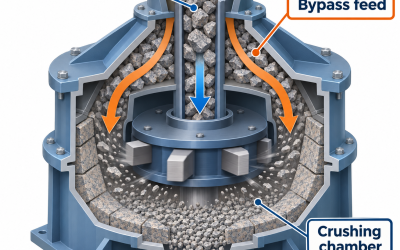
If the shift is already present at the product belt, trace it through the screening and crushing stages. The granite crushing circuit example describes how primary crushing fits into a wider granite plant configuration.
Include Loader Reclaim in the Trial
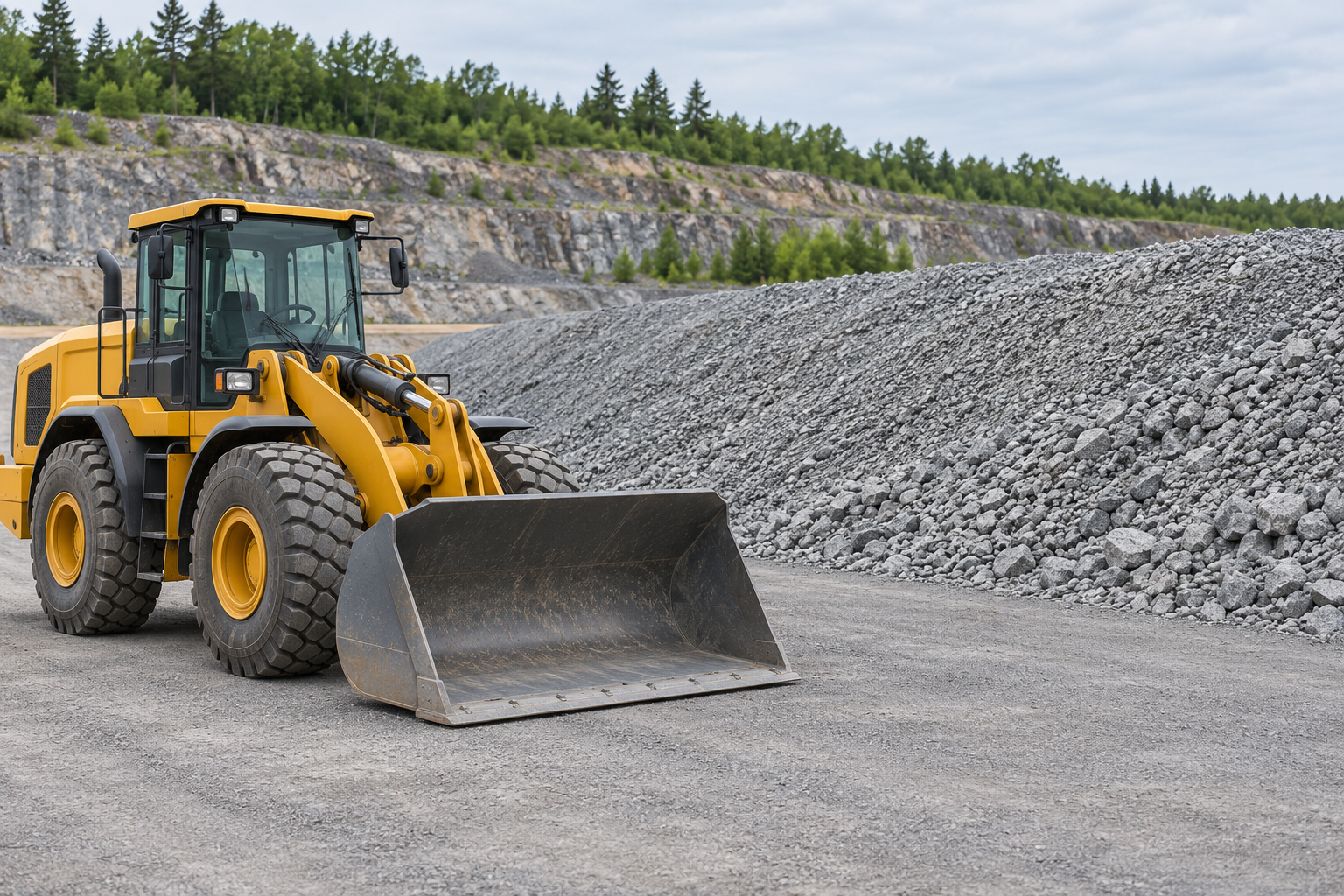
Set a reclaim route that draws from multiple accessible points of the working face within the marked lot. Have operators record which sections contribute to each sampled load. Keep the pad clean and maintain the site’s approved loader access and face geometry. Compare the results with the baseline route under comparable feed conditions. If a revised reclaim pattern alone keeps the dispatched product within limits at the required rate, the existing stacker may have sufficient coverage.
Specify the Stacker Around Loadout Acceptance
Give suppliers the site plan, production rate range, required usable storage, product grading envelope, and loader access lanes. Ask for a drawing that shows the sweep and extension limits, discharge elevations through pile buildup, and where the loader can reclaim without interfering with stacker travel. Clarify which party supplies the controls and how the conveyor interfaces with the final product belt.
Agree on the acceptance trial before placing the order. Define the lot boundaries, belt and loadout sampling intervals, controlling sieves, minimum sustained throughput, and the permitted gradation range for each assessed load or interval under the project specification. Require results over a representative buildup and reclaim sequence, including the stages where the baseline showed the greatest variation. A vendor demonstration of stacking capacity addresses only one part of the purchase decision. The matched loadout results show whether the complete arrangement can deliver the specified road base.
mj
Author & industry specialist at ZWCC Mining & Crushing